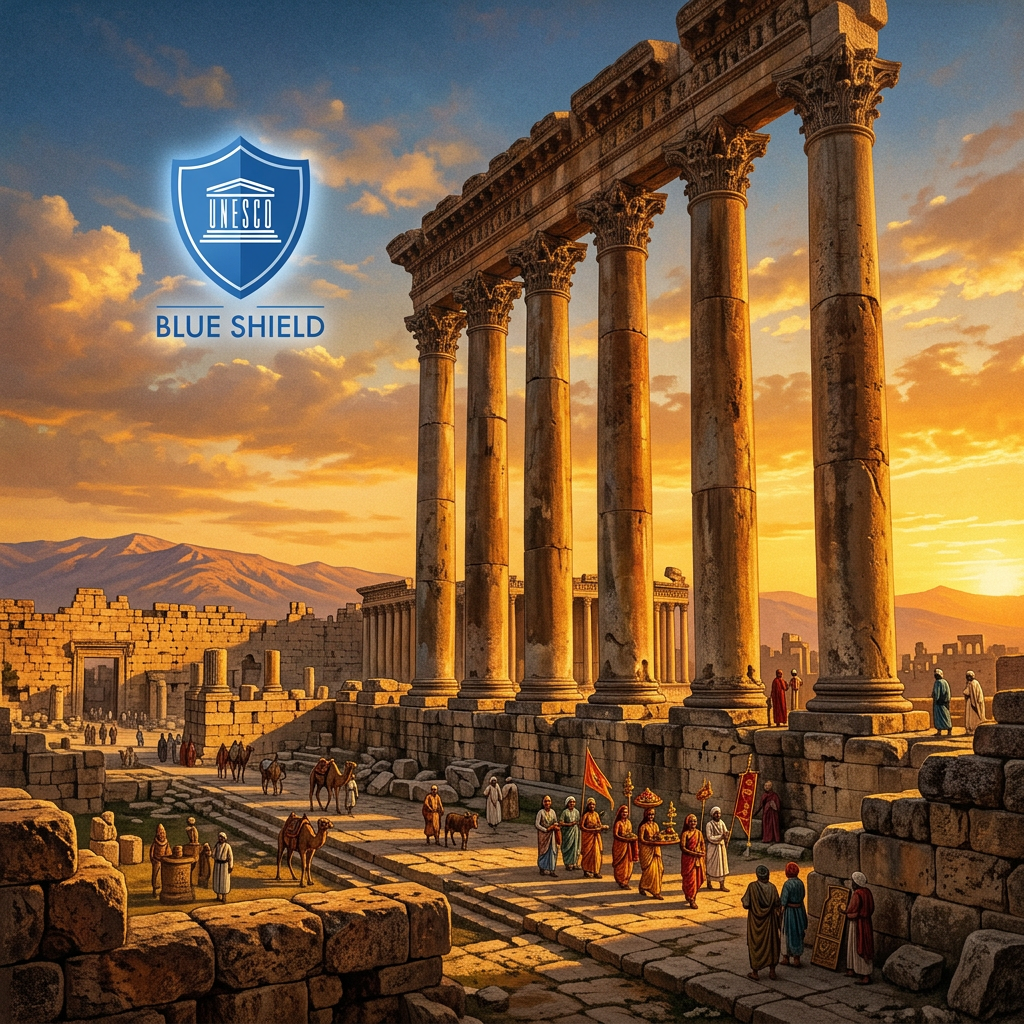
In a landmark move to safeguard global history, UNESCO has granted "enhanced protection" status to 39 critical archaeological and cultural sites across Lebanon. This designation, enacted under the 1954 Hague Convention for the Protection of Cultural Property in the Event of Armed Conflict, provides the highest level of legal immunity and international oversight. The list includes world-renowned locations such as the Roman temples of Baalbek, the ancient Phoenician city of Tyre, and the medieval Citadel of Raymond de Saint-Gilles in Tripoli.
The decision was prompted by a formal request from the Lebanese government to prevent the irreparable loss of heritage sites that are fundamental to both national identity and biblical history. Under this status, any intentional damage to these sites is classified as a war crime under international law. UNESCO has also committed over $100,000 in emergency funding to implement on-the-ground measures, including the installation of the iconic 'Blue Shield' emblems and specialized heritage-protection training for local security forces.
Lazare Eloundou Assomo, UNESCO's Director of Culture, emphasized that these sites represent the "backbone of cultural hope and recovery." For historians and archaeologists, the protection of sites like Byblos and Sidon is critical, as they contain unexplored strata of Mediterranean trade history, early Christian settlements, and Phoenician maritime infrastructure that have yet to be fully documented by modern research missions.