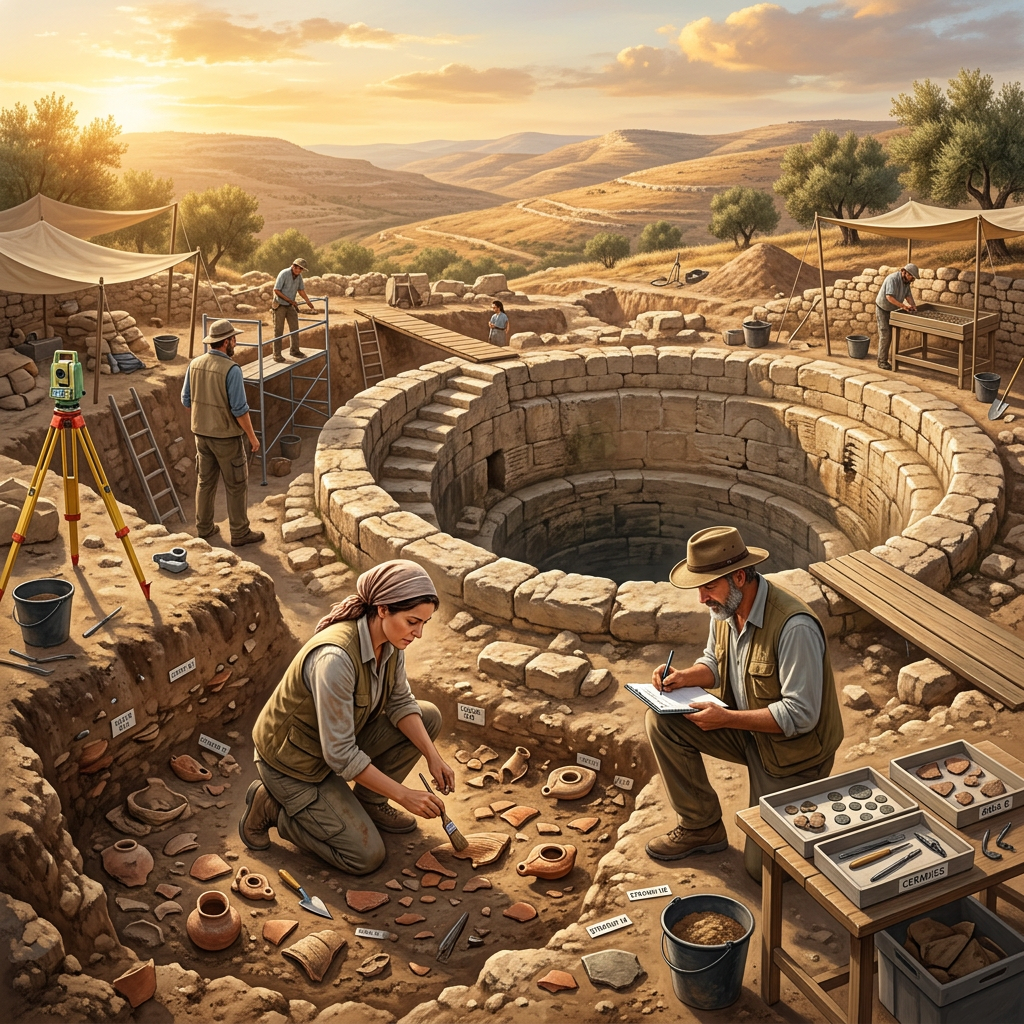
Archaeologists from Tel Aviv University have uncovered a chilling but scientifically significant mass grave of infants at the ancient site of Tel Azekah, located southwest of Jerusalem. The remains of approximately 68 to 89 individuals, the vast majority of whom were under the age of two, were found deposited within a repurposed water reservoir. The burials date to the Persian period (6th–5th centuries BCE), a time when Tel Azekah was a flourishing Judean town.
The discovery addresses a long-standing mystery in Biblical archaeology: the apparent absence of infant remains in standard Iron Age and Persian period cemeteries. Lead researcher Prof. Oded Lipschits suggests that high infant mortality rates may have led to distinct burial practices for children who had not yet reached a certain social status. Instead of individual graves, they were interred in centralized, sacred, or communal locations like this reservoir.
Analysis of the bones and accompanying pottery indicates the burials occurred over roughly a century. The findings offer a rare, poignant glimpse into the demographics and social structures of ancient Judean society. While the site evokes a sense of tragedy, it provides essential data on ancient health, nutrition, and the cultural perception of childhood in the biblical world, where nearly five out of seven children did not survive to see their fourth birthday.