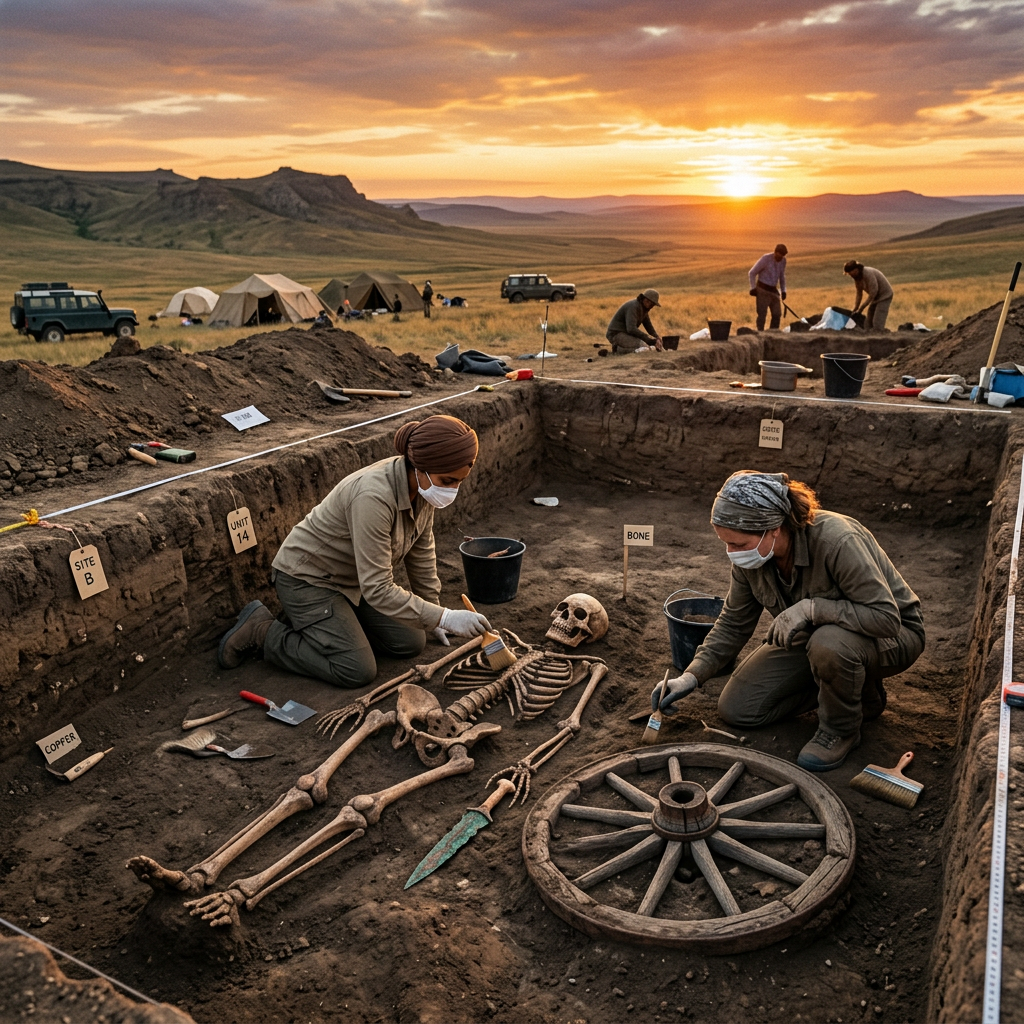
A landmark study published in Nature has provided the most definitive genomic map to date of the Yamnaya migrations. Researchers analyzed ancient DNA from 500 skeletons found in Kurgan burial mounds across the Eurasian Steppe, dating between 3300 and 2600 BCE. The findings confirm a massive, sex-biased migration event that fundamentally reshaped the genetic landscape of both Europe and the Indian subcontinent.
The study reveals that the spread of Indo-European languages and wheeled-vehicle technology was accompanied by a distinct genetic signature that appears in the Indian ancestral population roughly 4,000 years ago. This data clarifies the long-debated 'Aryan Migration Theory' by providing concrete evidence of gene flow from the Steppe into the Northwest of India, merging with the indigenous populations of the Late Harappan period.
Furthermore, the research highlights
- The introduction of specific lactase persistence genes to the region
- Evidence of advanced metallurgical skills carried by these migrant groups
- A direct correlation between the expansion of these groups and the earliest Vedic cultural markers found in the archaeological record.