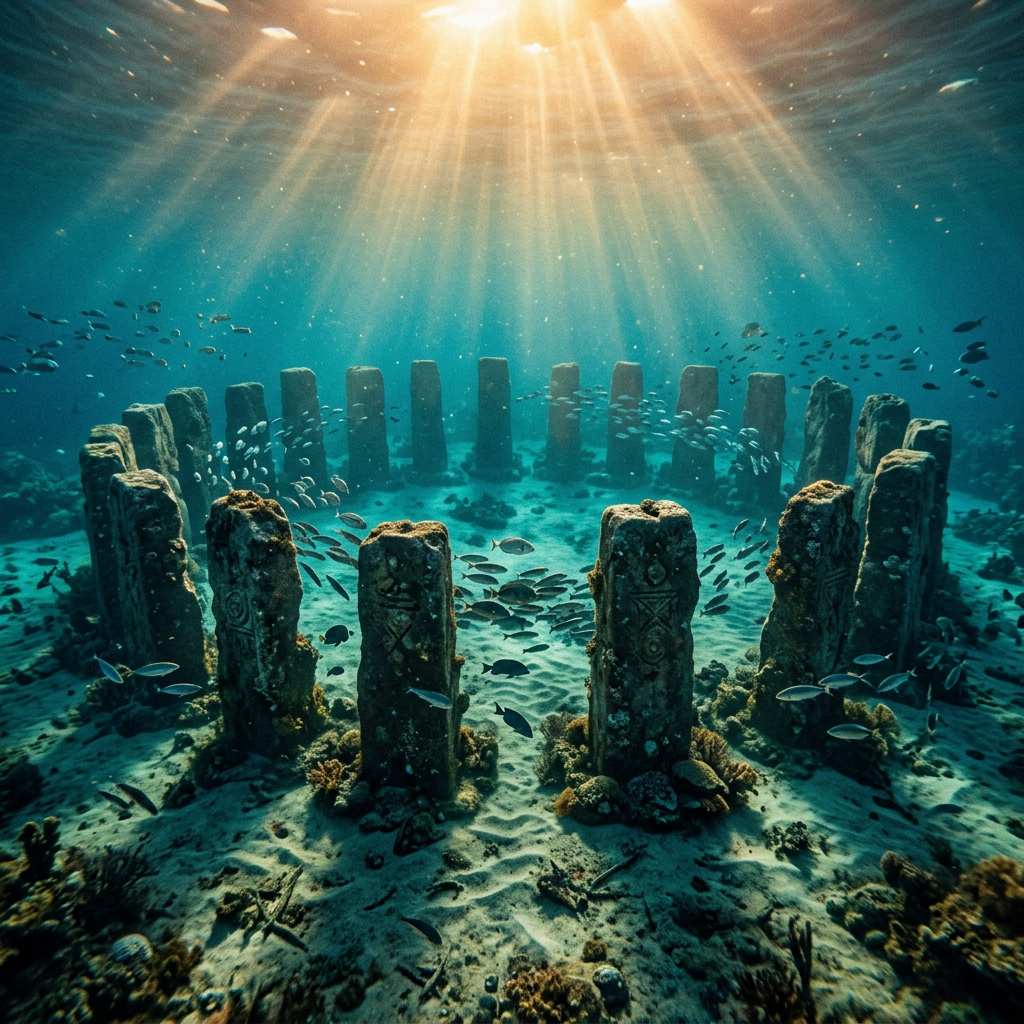
Marine archaeologists using side-scan sonar off the coast of Croatia have discovered a massive, circular stone monument 20 meters below the surface of the Adriatic Sea. Dated to approximately 5000 BCE, this 'Underwater Stonehenge' consists of over 40 upright monoliths, some standing four meters tall. This is the largest and most complete Neolithic structure ever found on the Mediterranean seabed.
The site was likely a ceremonial center for a coastal community before it was submerged by rising sea levels at the end of the last glacial period. Divers have recovered several flint tools and pottery shards from the site, which show a distinct cultural style previously unknown in the region. The discovery challenges existing theories about the complexity of Neolithic maritime cultures.
The site's preservation is extraordinary due to its depth and the lack of strong currents.
- The stones are arranged in two concentric circles
- The central pillar shows signs of intentional carving
- Organic remains nearby suggest the site was used for seasonal festivals related to the summer solstice.