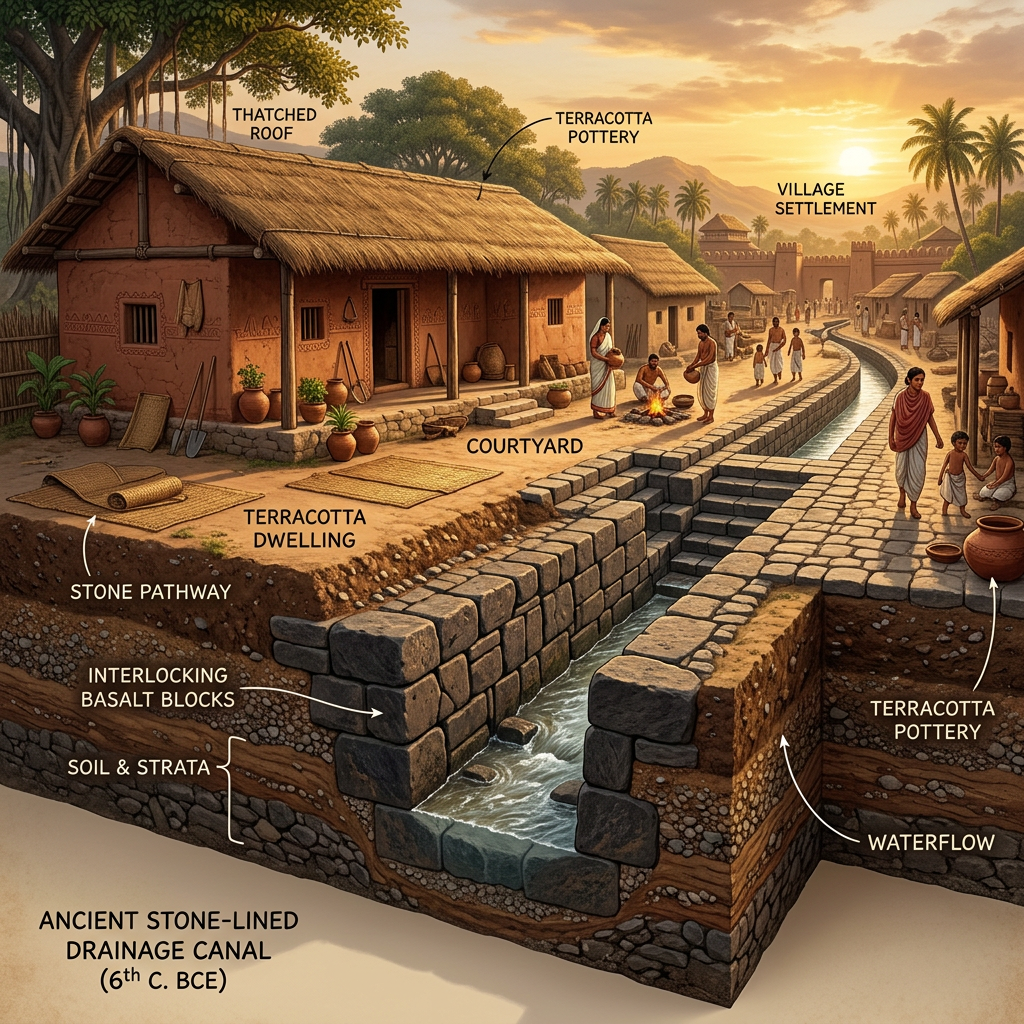
Recent excavations at the ancient city of Sisupalgarh in Odisha, India, have revealed a surprisingly advanced urban drainage and water management system dating to the 6th century BCE. This discovery pushes back the timeline for sophisticated urban planning in the Indian subcontinent, showing that the residents of Sisupalgarh had mastered hydraulic engineering centuries before the rise of the Mauryan Empire.
The system consists of interlinked stone-lined canals and deep sedimentation tanks designed to prevent clogging during the heavy monsoon season. Archaeologists found that the city’s layout was strictly grid-based, with residential quarters specifically elevated to avoid flooding. "The precision of the stone joinery is reminiscent of Harappan techniques, suggesting a continuity of knowledge that survived the collapse of the Indus Valley cities," noted the excavation director.
Key findings include:
- Interlocking basalt blocks used for canal walls
- Ceramic pipes for domestic sewage disposal
- A massive reservoir capable of sustaining a population of 30,000 during droughts.