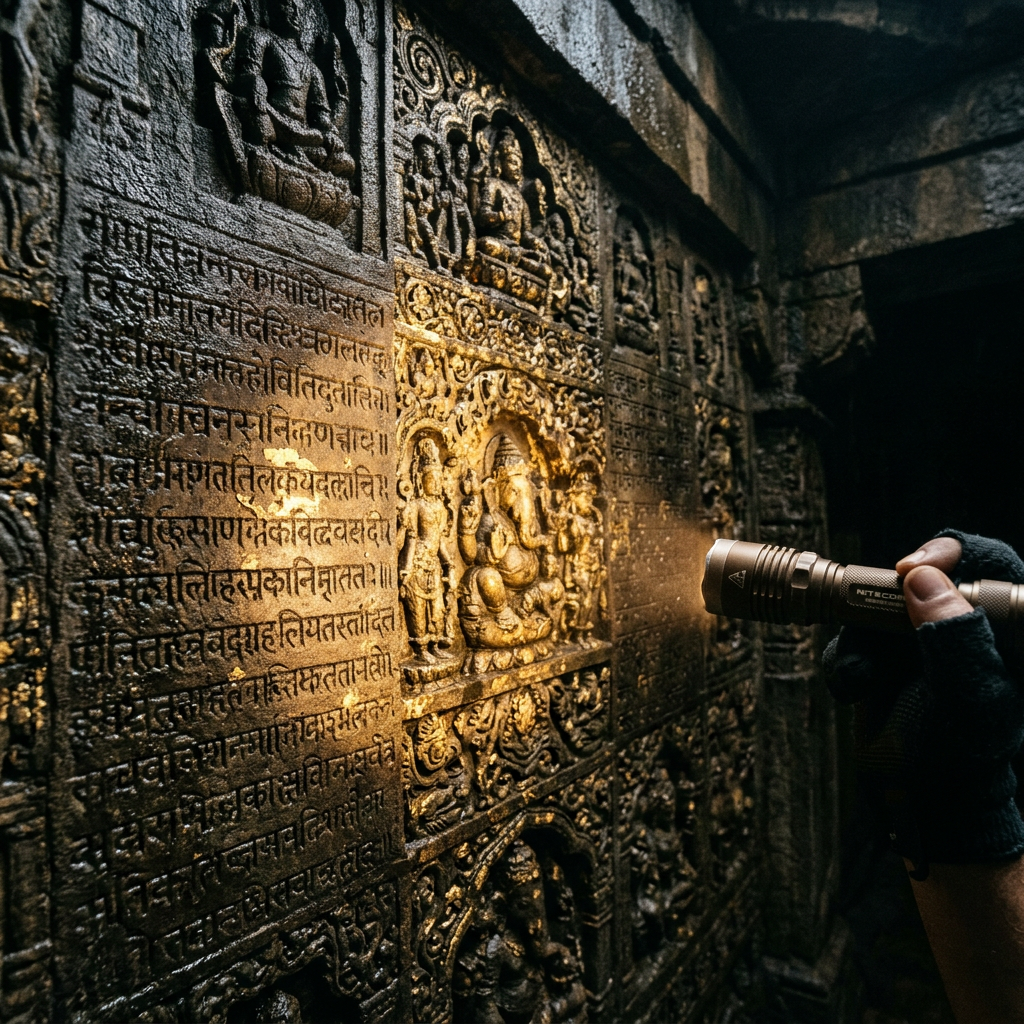
A team of restorers at the Borobudur Temple in Indonesia has stumbled upon a previously unknown subterranean chamber located directly beneath the eastern staircase. Inside, they found a series of remarkably preserved Sanskrit inscriptions carved into andesite stone. Preliminary dating suggests these inscriptions belong to the early 9th century, during the height of the Sailendra Dynasty.
The text contains verses from the Gandavyuha Sutra, but with unique local variations that suggest a deep integration of Indian Vedic philosophy with Javanese ancestral worship. This discovery provides a missing link in understanding how Sanatan Dharma and Buddhist thought evolved in Southeast Asia. The chamber also contained several bronze ritual vessels and a silver plate depicting the Dashavatara of Vishnu.
Experts believe the chamber was sealed intentionally to protect sacred relics during a period of volcanic activity.
- The Sanskrit script used is an early form of Kawi
- The inscriptions mention a previously unknown 'protector' king
- The artifacts show high-level metallurgical skills, featuring 95% pure silver.