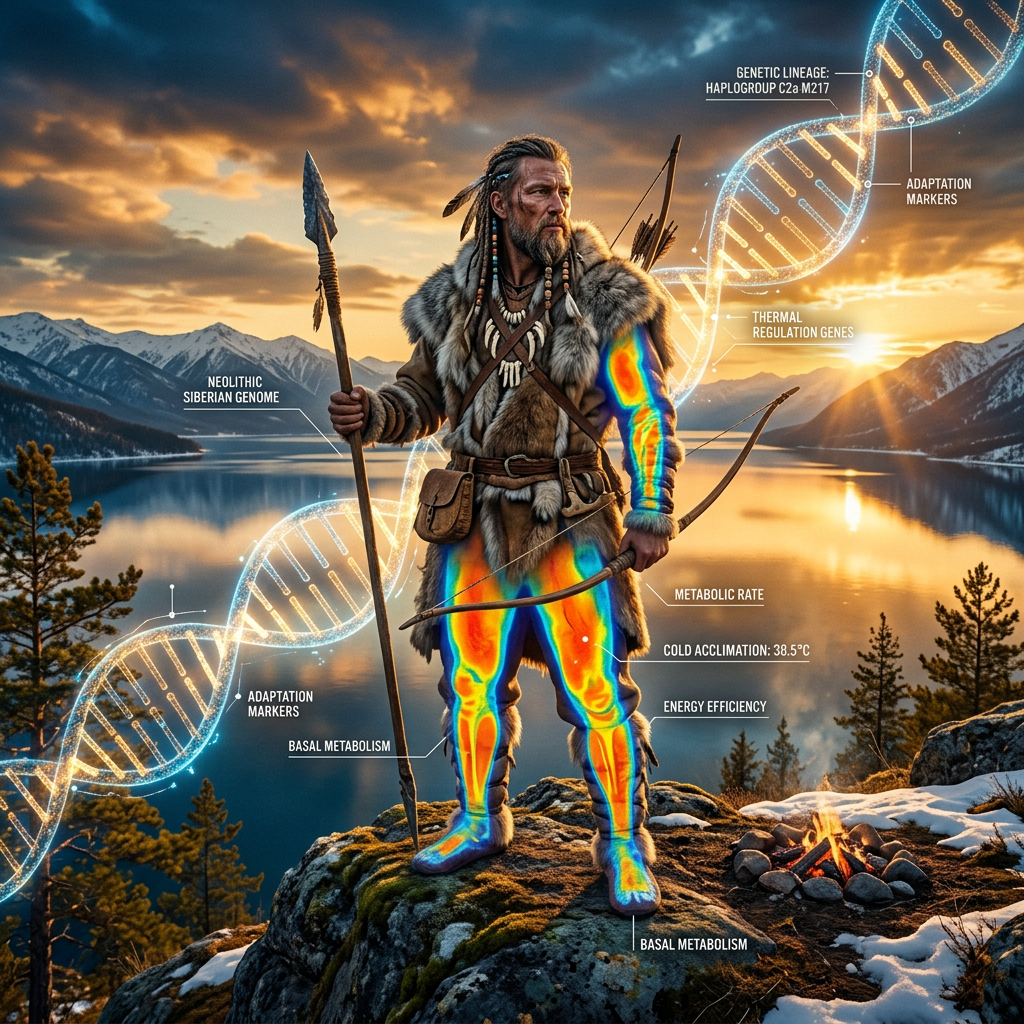
A groundbreaking paleogenomic study published in Molecular Biology and Evolution has identified specific genetic markers in 8,000-year-old remains from the Baikal region of Siberia. These markers represent the earliest known evolutionary adaptation in humans to sub-zero environments, specifically affecting brown adipose tissue thermogenesis and lipid metabolism.
The study, led by an international team of geneticists, sequenced the genomes of five individuals from the Neolithic Kitoi culture. The results show that these populations possessed a unique variant of the TBX15 gene, likely inherited from a ghost Denisovan-like lineage, which helped their bodies generate heat more efficiently than their contemporaries in warmer climates.
This discovery provides a crucial link in understanding how early humans successfully colonized the planet's harshest environments. It also sheds light on the migratory history of Northeast Asia, suggesting that these cold-adapted traits were later carried across the Bering Land Bridge into the Americas by the ancestors of Indigenous populations.