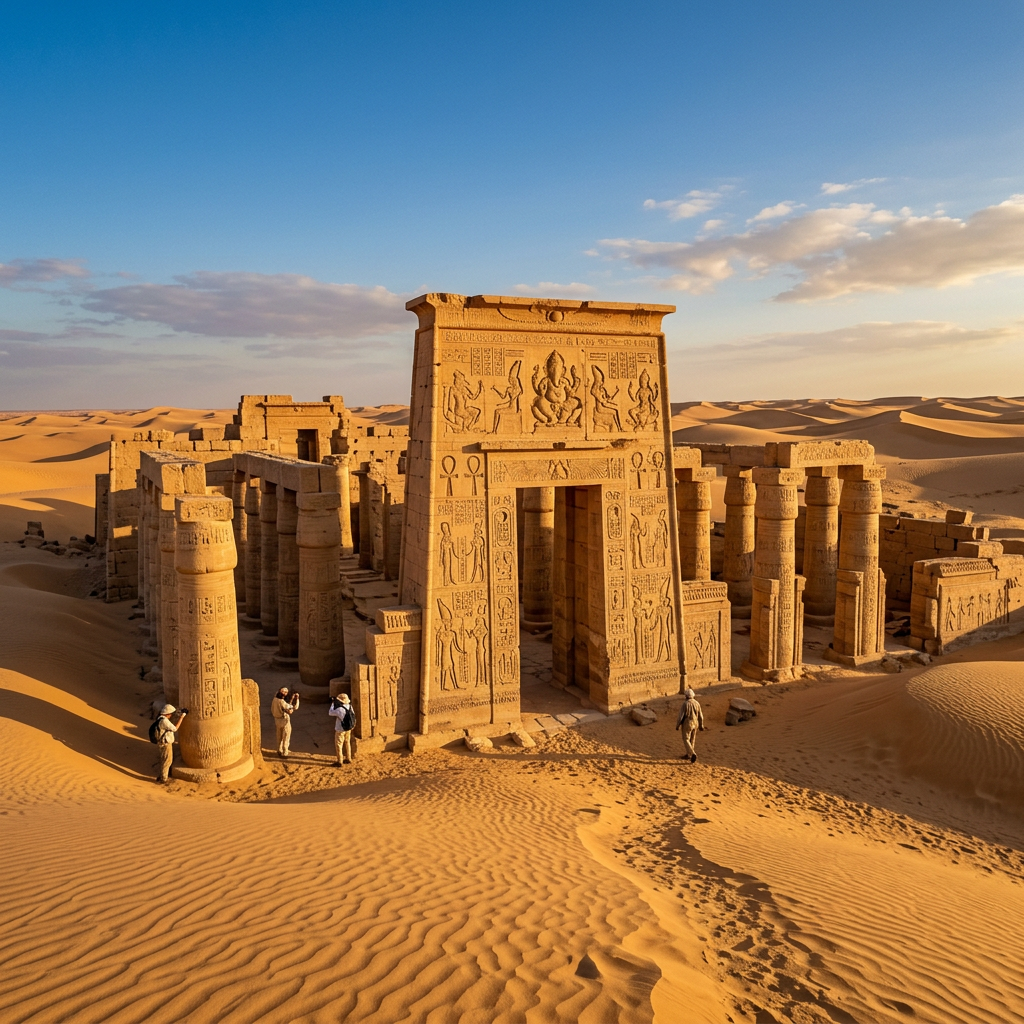
An international archaeological mission has announced the discovery of a previously unknown Kushite royal settlement deep within the Bayuda Desert of Sudan. The site, dating to approximately 500 BCE, features a central palace structure, several elite residences, and a series of well-preserved sandstone stelae inscribed with Meroitic and Egyptian hieroglyphs.
The discovery is significant because it challenges the long-held belief that the Kushite administration was confined largely to the Nile Valley. This desert outpost appears to have served as a strategic hub for trade caravans traveling between Meroë and the Red Sea, facilitating the movement of gold, ivory, and exotic skins.
Preliminary excavations have unearthed luxury goods, including Attic pottery and Phoenician glass, indicating that the settlement was part of a vast international trade network. Scholars believe the site may provide the key to deciphering more of the Meroitic script, as the stelae contain bilingual administrative records from the Napatan-Meroitic transition period.