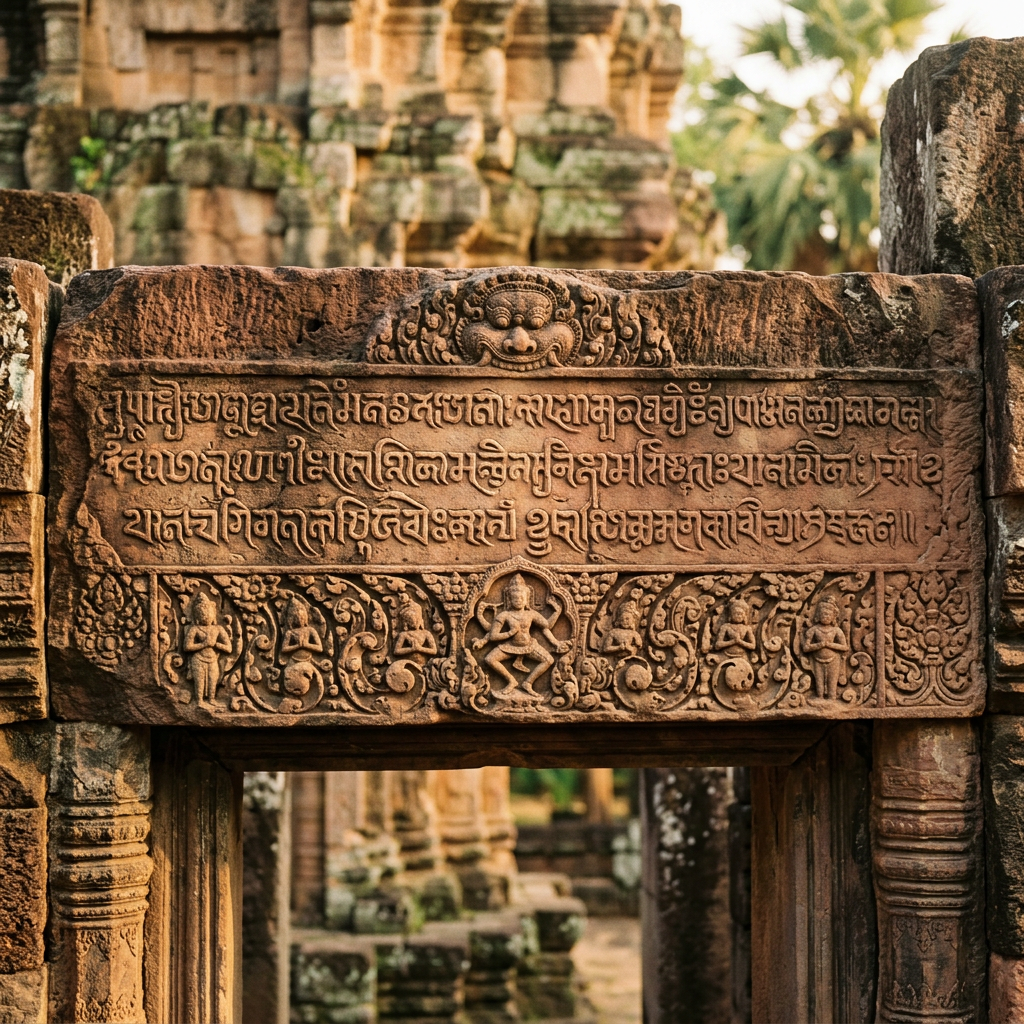
During structural reinforcement work at the Prasat Hin Phimai temple in Thailand, restorers discovered a series of hidden Sanskrit inscriptions on the inner faces of the lintels. These texts, dated to the mid-10th century, explicitly mention the arrival of emissaries from the Chola Empire of South India. The inscriptions describe the exchange of sacred relics and architectural treatises, suggesting a far more direct cultural and technological transfer than previously theorized.
The discovery is revolutionary for Southeast Asian history, as it provides a precise timeline for the integration of Chola-style temple engineering into Khmer architecture. Lead epigraphists noted that the Sanskrit used exhibits a specific Grantha influence typical of the Coromandel coast. This finding confirms Phimai's role as a critical hub on the maritime and overland 'Dharmic Road' connecting India to the heart of the Khmer Empire.
- Inscribed stones: 4 large sandstone blocks
- Key figures mentioned: Rajendra Chola I and Jayavarman V
- Language: Classical Sanskrit in Khmer-Grantha script
Authorities plan to create a dedicated museum wing at the Phimai Historical Park to display digital reconstructions of these inscriptions, highlighting the ancient Hindu-Buddhist connections across the Bay of Bengal.