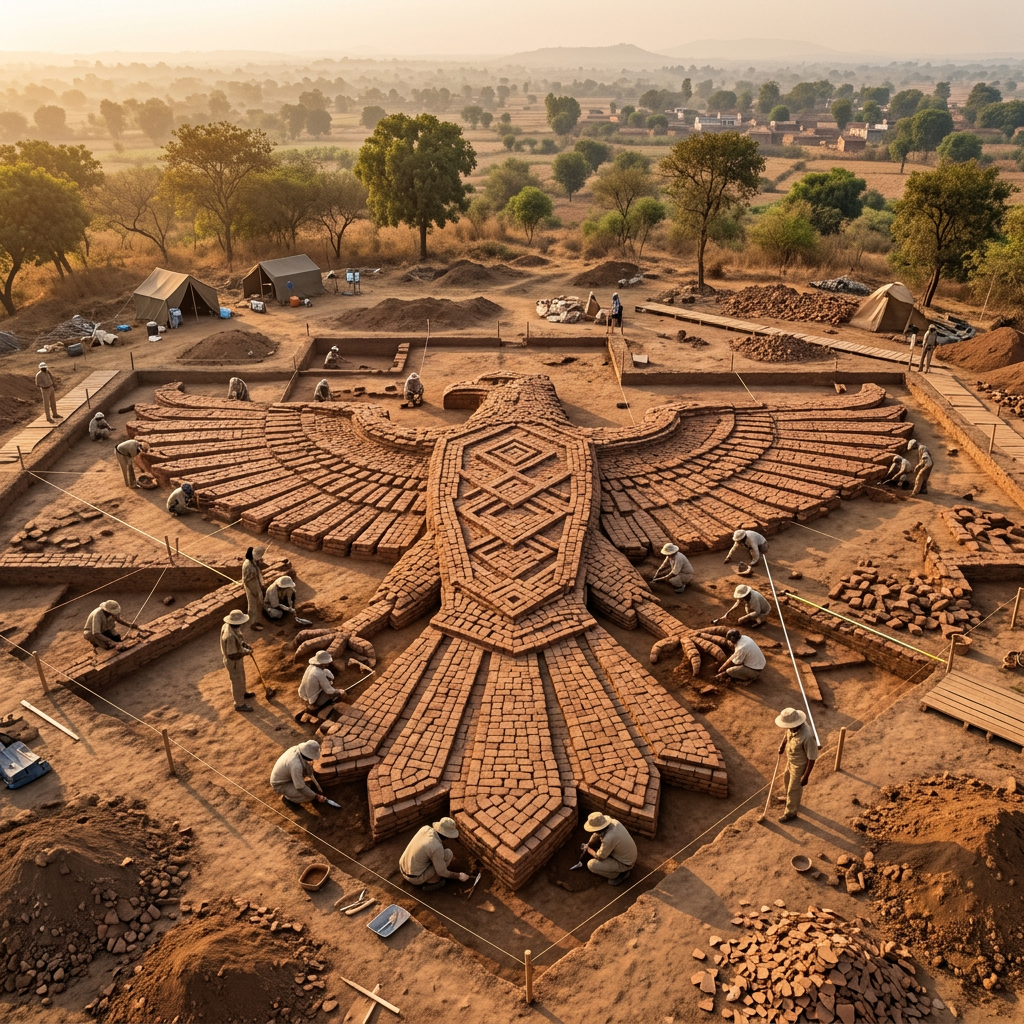
Excavations led by the Maharashtra Heritage Bulletin at the site of Paunar near Wardha have unearthed a massive fire-altar (Yagna-shala) complex dating back to the Vakataka-Gupta transition period. The structure features a series of precisely aligned brick layers forming a Shyena-chiti (eagle-shaped altar), as prescribed in the Shulba Sutras, the ancient Indian texts on geometry and altar construction.
The precision of the brick dimensions—following a strict 1:2:4 ratio—highlights the advanced mathematical knowledge and engineering standards of the 5th and 6th centuries CE. Along with the altar, archaeologists found charred remains of botanical offerings and ritual pottery, which will undergo isotopic analysis to reconstruct the specific Vedic rites performed at the site. This find is significant as it provides a rare physical link between Vedic literary descriptions and actual archaeological practice in Central India.
Local historians suggest the site may have been a major center for state-sponsored rituals under the Vakataka dynasty, who were known patrons of Sanskrit learning and Sanatan traditions. The site is now being considered for a protected "Heritage Park" status to preserve the fragile brickwork from the elements, ensuring that this example of ancient Indian science and spirituality remains accessible for future study.