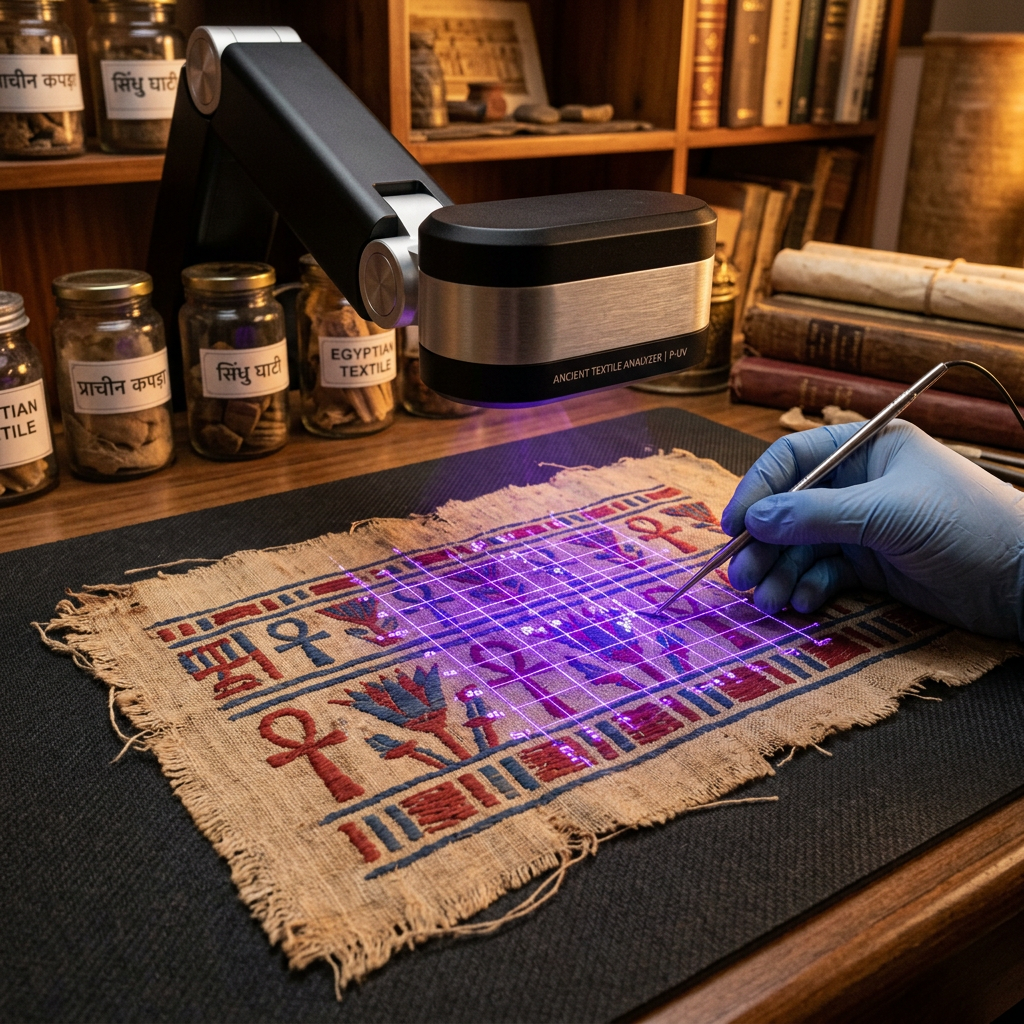
A new study published in the Journal of Archaeological Chemistry has fundamentally changed our understanding of ancient Egyptian fashion and technology. By applying non-invasive hyper-spectral imaging to textile fragments from the 18th Dynasty, researchers have identified evidence of complex, multi-stage dyeing processes that utilized both organic plant extracts and mineral mordants to create exceptionally stable and vibrant colors.
The analysis revealed that Egyptian dyers were using a sophisticated sequence of alum and iron-based pre-treatments to ensure that dyes like madder and woad would bond deeply with flax fibers. This process allowed for the creation of intricate patterns and shades that have remained chemically distinct even after three millennia of burial.
This research highlights the advanced chemical knowledge possessed by New Kingdom artisans, suggesting they understood the molecular interactions between different natural substances. The findings also point to a highly organized textile industry that imported rare dyestuffs from as far as the Near East, underscoring the reach of ancient Egyptian trade networks.