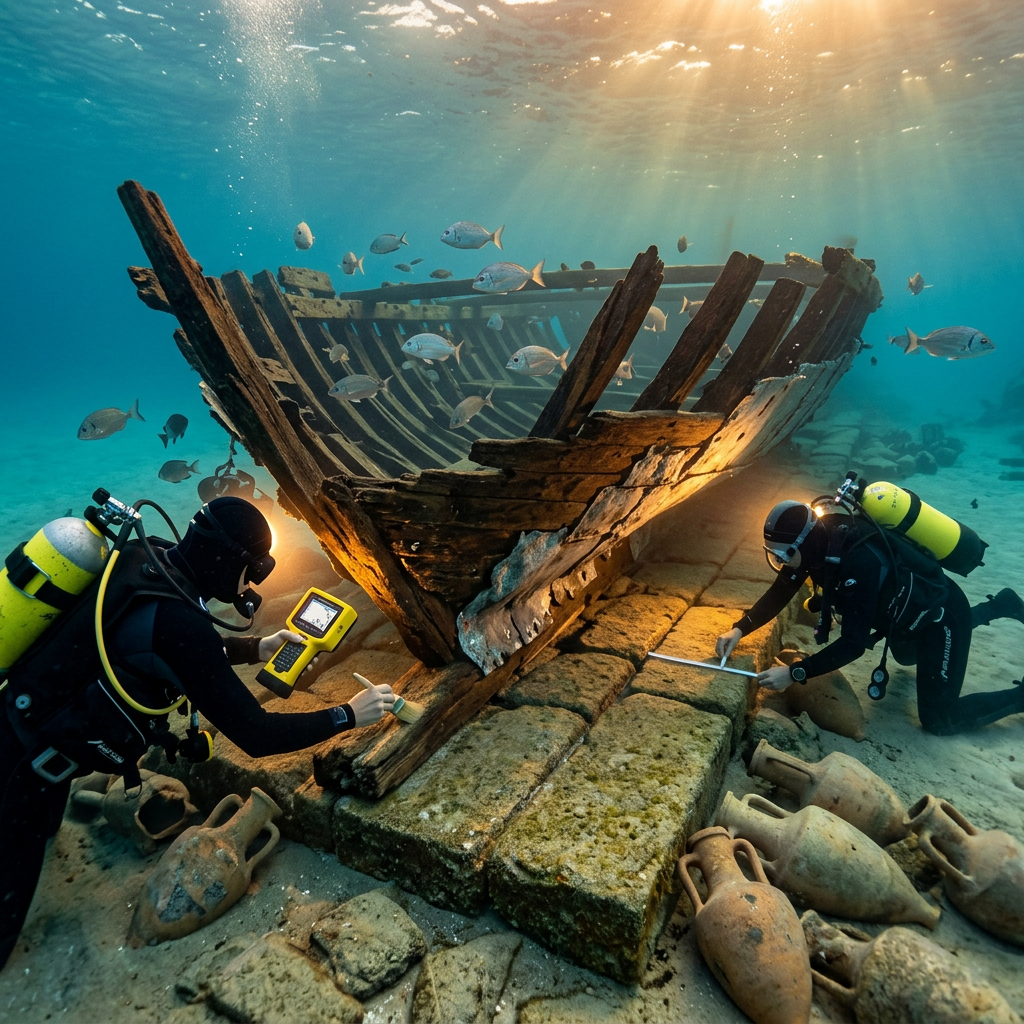
A joint maritime expedition off the coast of Ghar el-Melh in Tunisia has located a remarkably preserved submerged naval facility dating to the 3rd century BCE. The structure, identified as a Punic ship-shed, contains the lower timber frames of two military quinqueremes, which were protected from decay by an innovative bitumen and lead-alloy sheathing.
This 'anti-biofouling' technology, previously thought to be a later Roman invention, demonstrates the advanced maritime chemistry of the Carthaginians. Researchers found that the lead plates were treated with a specific copper-sulfate compound designed to prevent the growth of shipworms and barnacles, allowing the Carthaginian navy to maintain a high-speed fleet for extended periods in the Mediterranean.
- Discovery of specialized dry-dock mechanisms using stone rollers.
- Intact storage jars containing resin used for waterproofing hulls.
- A rare 'captain's seal' with the image of the goddess Tanit found near the slipway.