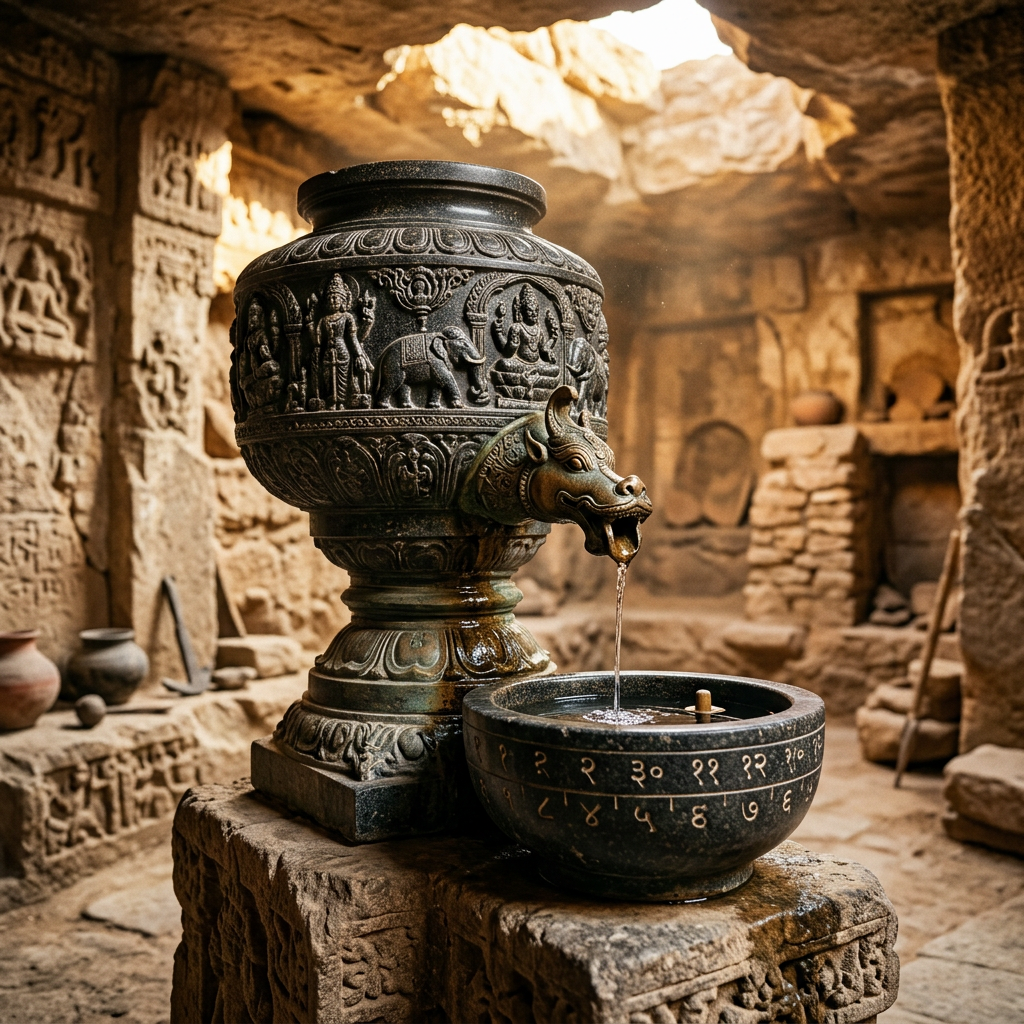
A remarkable find in the historic town of Vadnagar has revealed a sophisticated clepsydra or water-clock mechanism dating to the 6th century CE. The device, constructed from polished granite and bronze, was found within the foundations of a residential complex believed to have belonged to a community of astronomers or mathematicians. The mechanism uses a series of graduated bronze bowls and a floating siphon system to track time with a margin of error of less than a minute per day.
The engineering of the clock aligns perfectly with the descriptions found in the Surya Siddhanta, an ancient Sanskrit treatise on astronomy. Archaeologists discovered that the clock was integrated into a larger hydraulic system that recycled water through a small ornamental garden, demonstrating the integration of science and aesthetic design in ancient Indian urbanism. The discovery confirms that advanced time-keeping technology was a standard feature of major scholarly centers in the post-Gupta era.
Inscriptions found on the clock's base mention the Nakshatras (lunar mansions) and indicate that the device was used to calculate the exact timing for astronomical observations.
- The bronze siphon is the oldest found in the subcontinent.
- Granite gears suggest a mechanical level of complexity previously unverified for this period.
- The site was likely a dedicated 'Jyotisha' (astronomy) school.