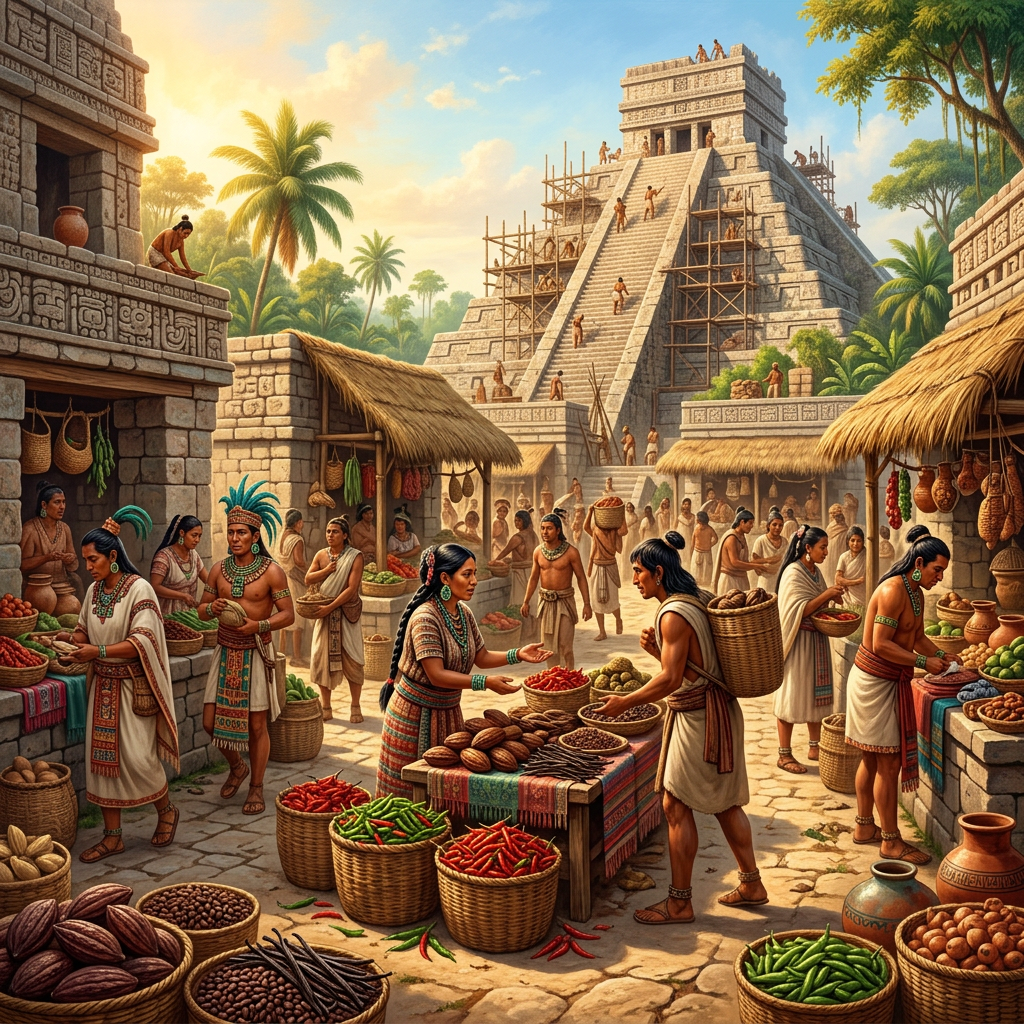
Archaeologists working in the El Mirador basin of northern Belize have uncovered a specialized urban sector dedicated entirely to the processing and trade of botanical goods. Dating to the Pre-Classic Maya period (approx. 300 BCE), the site consists of dozens of stone platforms that served as drying racks and market stalls. Soil samples recovered from these platforms have yielded high concentrations of fossilized pollen and phytoliths from non-native species, indicating a vast trade network.
The discovery suggests that the early Maya had a highly organized system for distributing cacao, vanilla, chili, and rare medicinal plants sourced from as far away as the Pacific coast and the highlands of Central Mexico. The presence of specialized grinding stones and storage pits suggests that this was not just a market, but a production hub for essential oils and medicinal pastes used in religious rituals and healthcare.
Dr. Elena Mendez, lead researcher, noted that the marketplace's proximity to a major ceremonial causeway highlights the economic importance of botany in Maya state-building.
- Over 50 distinct plant species have been identified so far.
- Remains of bark-paper suggest that inventory records or medicinal recipes may have been kept on-site.
- Intricate stone carvings found nearby depict deities associated with plant growth and healing.