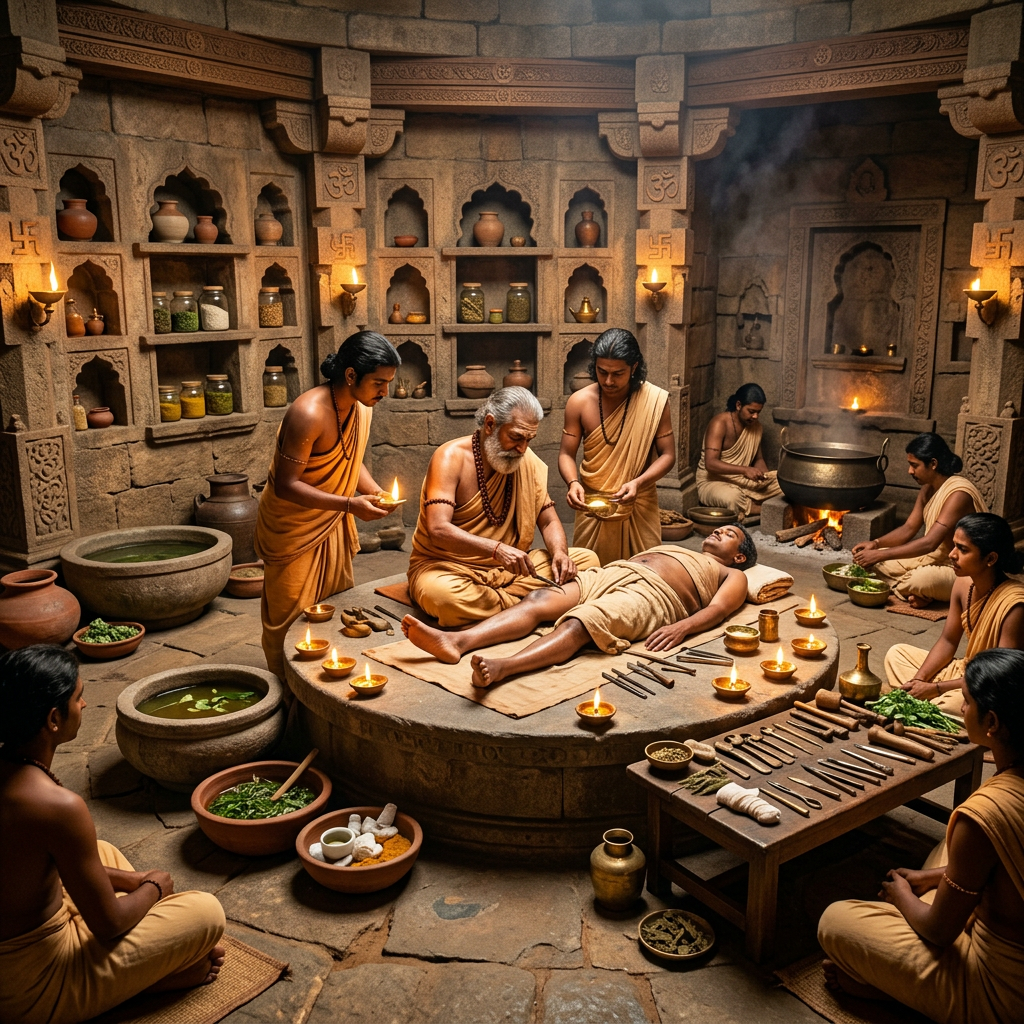
Archaeologists excavating near the ancient city of Ujjain have uncovered a remarkable 6th-Century BCE structure identified as an Ayurvedic surgical theatre. The site features a central circular platform surrounded by specialized stone basins and drainage channels, suggesting a highly organized environment for medical procedures. This discovery provides the first physical evidence of the advanced anatomical knowledge described in the Sushruta Samhita, one of the foundational texts of Ayurveda.
Among the artifacts recovered are specialized surgical instruments made of high-carbon steel, including scalpels, forceps, and needles that mirror descriptions in ancient Sanskrit manuscripts. The presence of charred remains of medicinal herbs such as Ashwagandha and Guggulu in nearby storage pits indicates a sophisticated understanding of anesthesia and antiseptic protocols during the Mahajanapada period.
Key features of the discovery include:
- Hydro-thermal basins: Used for sterilizing instruments and cleansing wounds with boiling water.
- Anatomical models: Clay figurines with precise markings of vital points (Marmas) used for student instruction.
- Sanskrit inscriptions: Early Brahmi characters identifying the facility as a center for "Shastrakarma" (surgery).
This finding significantly pushes back the timeline for organized clinical surgery in India and highlights the role of Ujjain as a premier center of Vedic science and learning in antiquity, operating long before the rise of the Mauryan Empire.