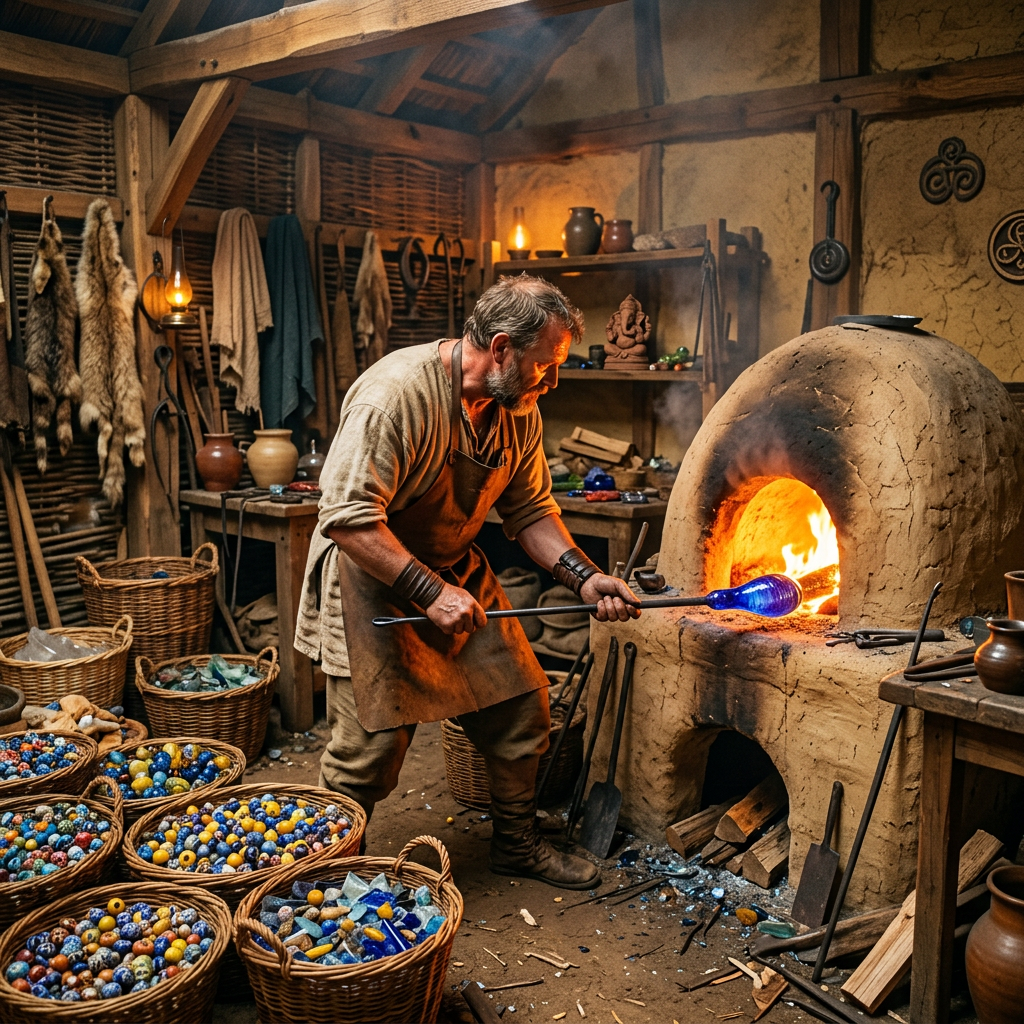
Archaeologists in the Czech Republic have uncovered the remains of a sophisticated 4th-century BCE glass-working facility at the site of a La Tène culture hillfort. The excavation revealed specialized high-heat furnaces capable of reaching temperatures over 1,100 degrees Celsius, alongside crucibles containing residues of cobalt and antimony used to create the iconic 'Celtic Blue' glass.
The discovery of standardized glass-bead molds and waste fragments suggests that the Celts had mastered complex chemical additives to control opacity and color, long before Roman influence reached the region. This site appears to have been a regional export center, with finished beads found in archaeological contexts as far as the Baltic Sea and the Mediterranean.
This find provides rare evidence of the industrial capabilities of Iron Age European societies. The presence of specialized fluxing agents like wood ash and natron indicates a deep understanding of mineralogy and heat management, placing Celtic craftsmen at the forefront of ancient pyrotechnology.