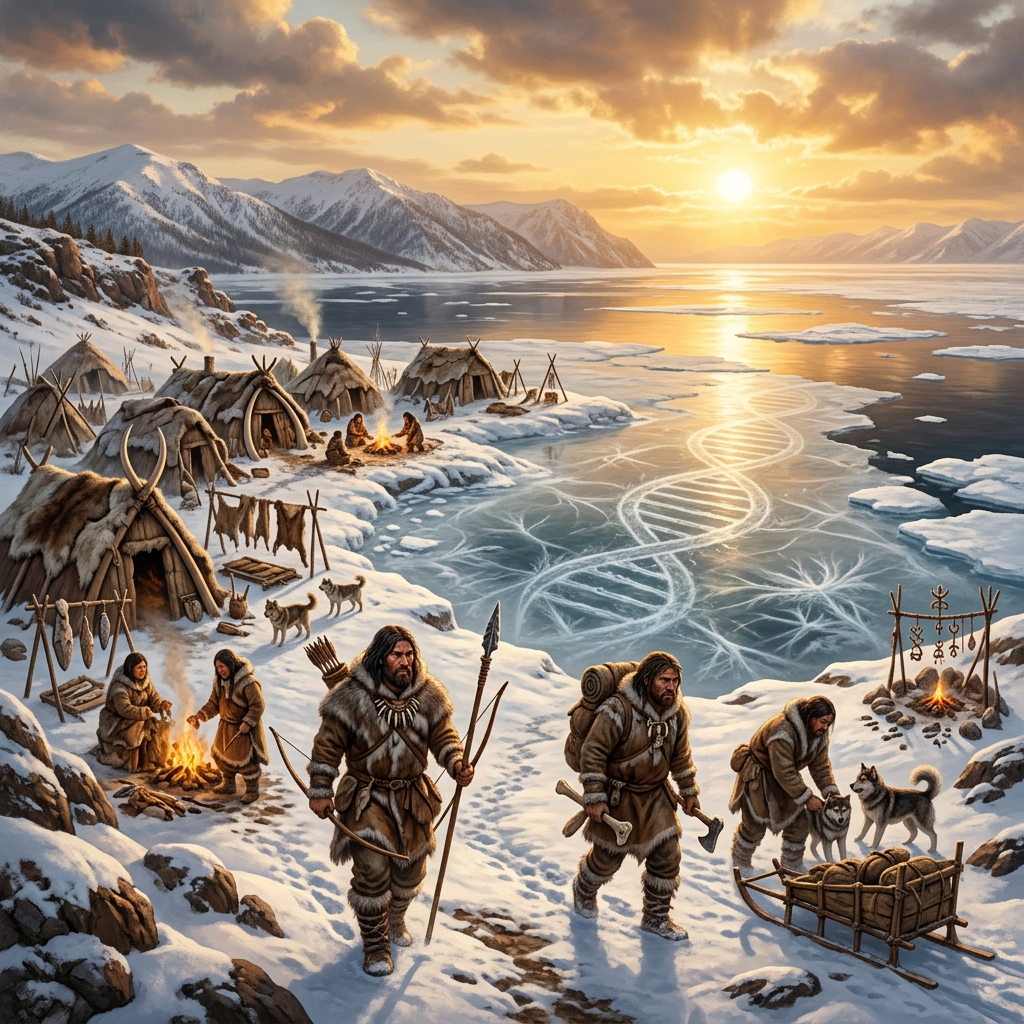
A massive paleogenomic study published in late April 2026 has successfully sequenced the genomes of 45 individuals from the 7,000-year-old 'Lake Baikal' Neolithic culture. The research identifies a previously unknown genetic divergence that marks the emergence of the Paleo-Siberian tribes. This "ghost lineage" appears to have split from East Asian ancestors during the peak of the Last Glacial Maximum.
The study reveals that these ancient Siberians possessed specific genetic adaptations for metabolizing high-protein diets and managing extreme thermal stress, which they passed on to modern indigenous populations across the Arctic.
- Identification of the 'Kitoi' genetic marker
- Evidence of long-distance migration from the Altai Mountains
- Direct maternal links to early North American lineages
The findings also suggest that Lake Baikal was a pivotal cultural crossroads, where distinct groups from the Amur River basin and the Western Steppe exchanged not only genes but also advanced micro-lithic tool technologies. This genomic map provides the most detailed look yet at the population movements that eventually populated the Americas.