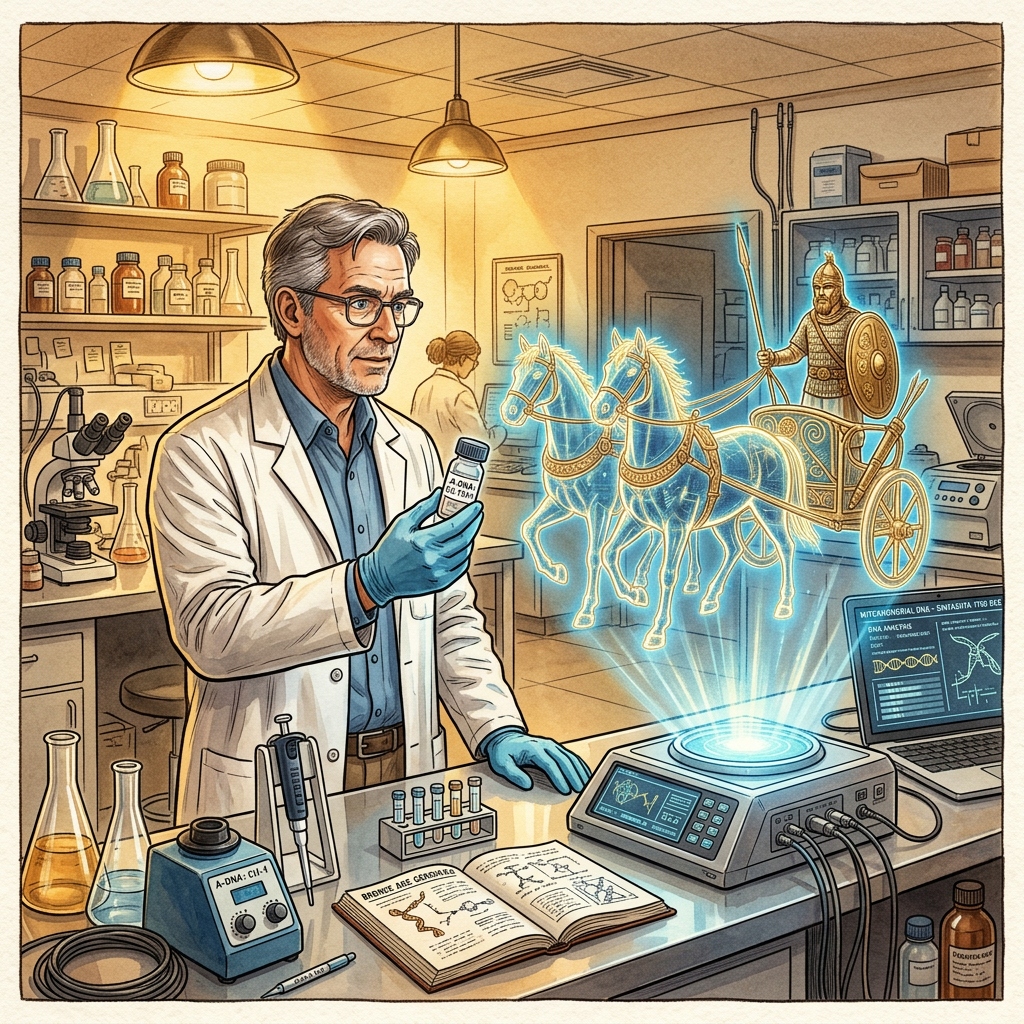
A groundbreaking paleogenomic study published this week has sequenced the DNA of individuals from the Sintashta culture of the Eurasian Steppe. The research confirms that these populations were the first to develop the spoked-wheel chariot, which facilitated rapid migrations into Central and South Asia. The genomic data shows a clear genetic link between these early charioteers and the later Bronze Age cultures of northern India.
The study suggests that the spread of Indo-Aryan languages was closely tied to these technological advancements. By analyzing dental calculus, researchers also found evidence of specialized diets involving dairy and early grains, indicating a highly adaptable pastoralist lifestyle that paved the way for modern Eurasian genetic diversity.