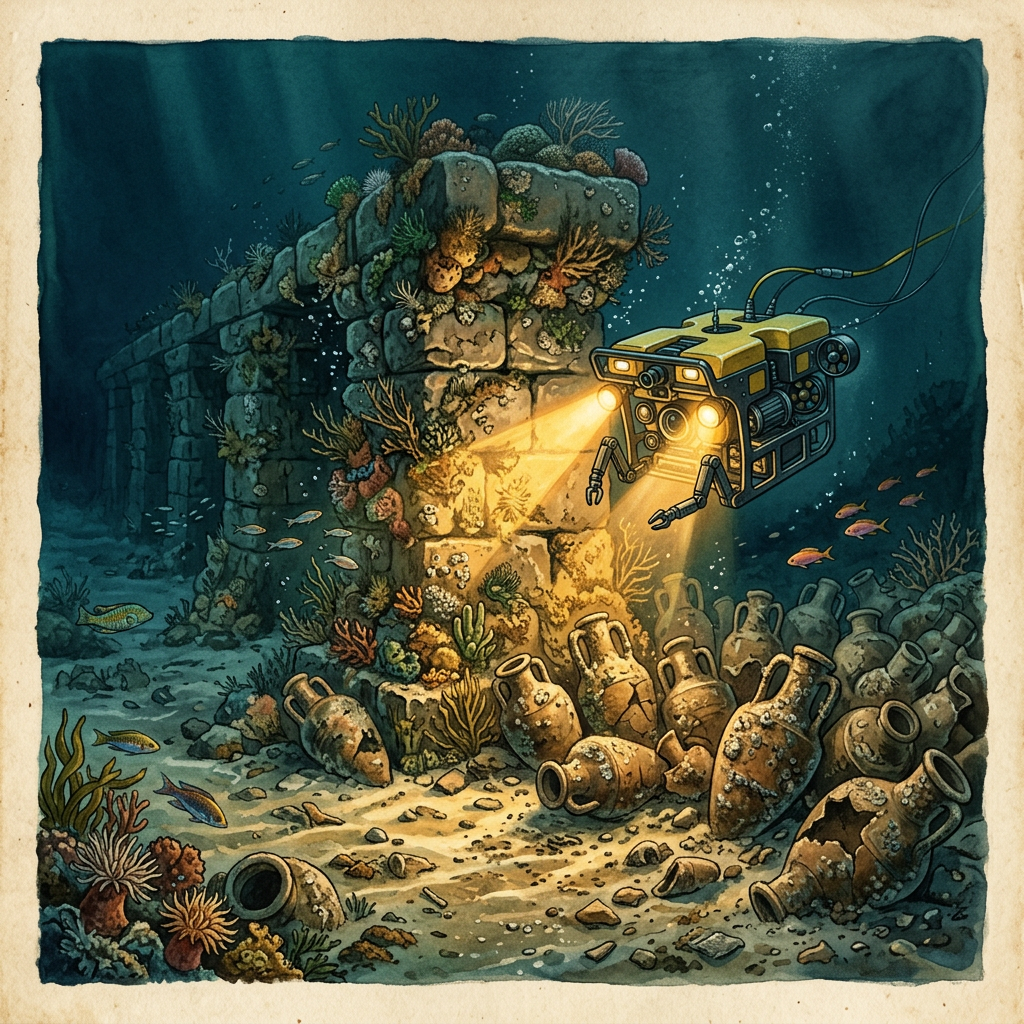
Marine archaeologists utilizing advanced Autonomous Underwater Vehicles (AUVs) have located the ruins of a massive 1st-century Roman maritime depot submerged off the Libyan coast. The site includes well-preserved stone piers, warehouses, and dozens of amphorae used for transporting olive oil and wine.
The discovery suggests that this port was a vital node in the trans-Mediterranean trade network, connecting North African agricultural production with the markets of Imperial Rome. The use of high-resolution sonar has allowed for a complete 3D reconstruction of the facility without disturbing the seabed.