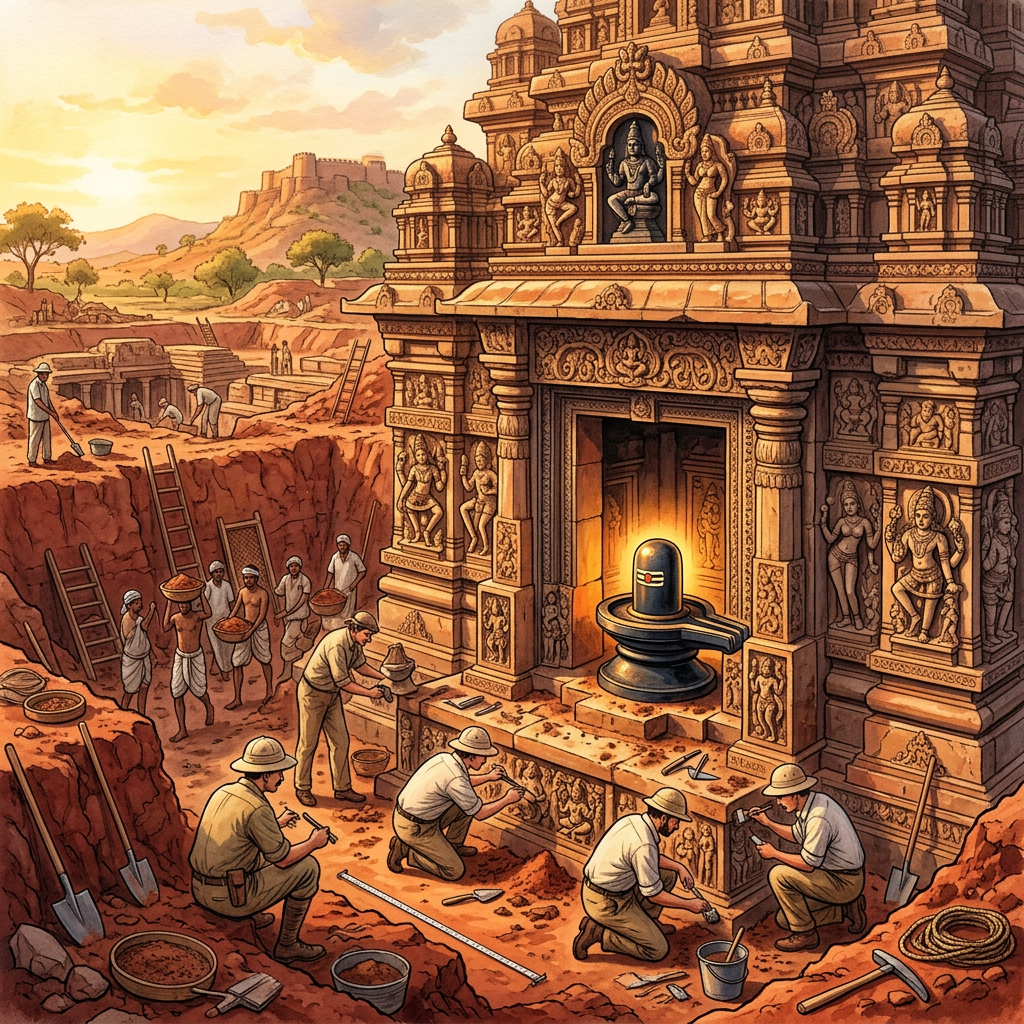
Work on a new highway project in Maharashtra's Latur district led to the accidental discovery of a pristine Rashtrakuta-era temple buried under layers of silt. The structure, dedicated to Lord Shiva, features exquisite stone carvings of deities, dancers, and geometric patterns that exemplify the high artistry of the 11th century. Preliminary assessments suggest the temple was part of a larger religious complex that served as a regional pilgrimage hub.
Archaeologists have noted the temple's unique architectural fusion of Nagara and Dravidian styles, which was characteristic of the later Rashtrakuta period. Local authorities have halted construction to allow for a full excavation and preservation effort, as the site is expected to yield more artifacts including inscriptions and copper plates that could clarify regional history.