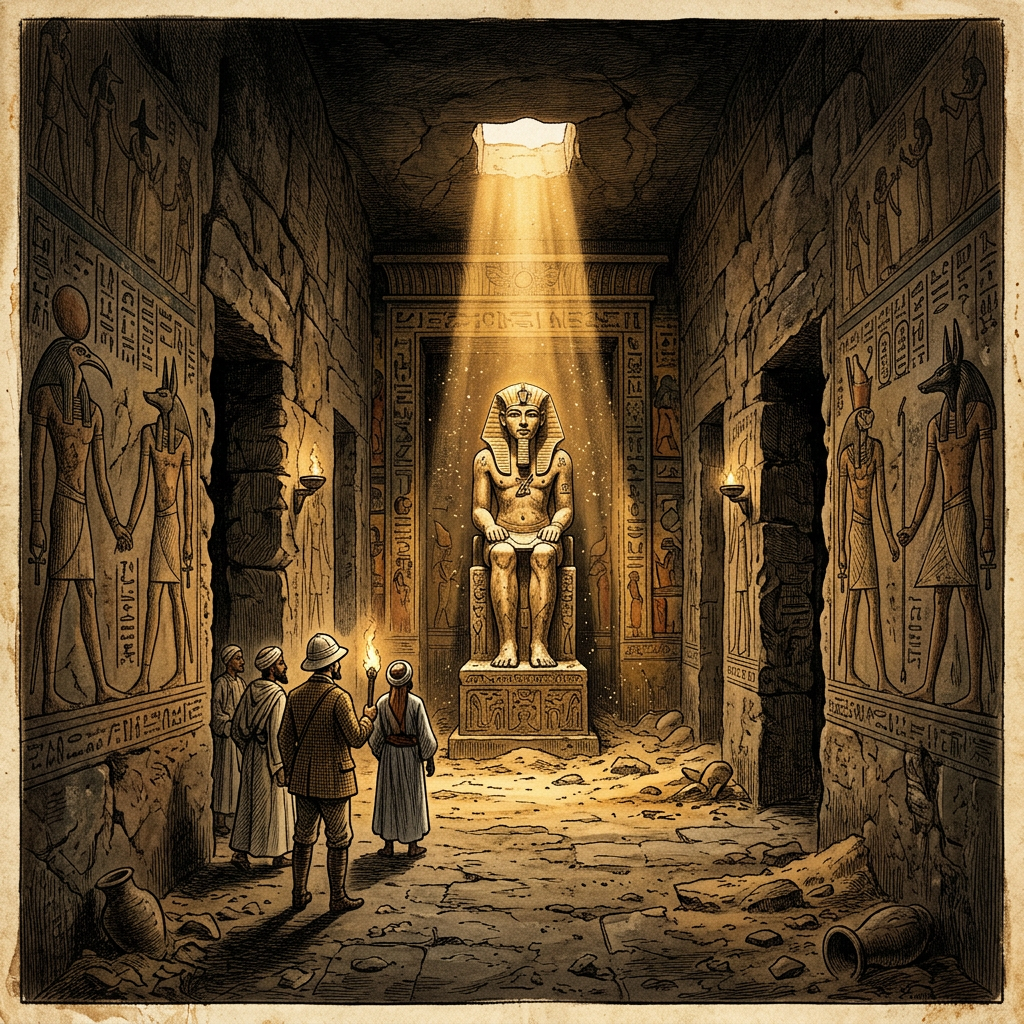
Archaeologists at the Giza Plateau have unearthed a pristine mastaba tomb belonging to a high-ranking official from the Fifth Dynasty. The structure is notable for its unique architectural alignment with the spring equinox sun. Unlike many contemporary tombs, this site features a narrow shaft that allows sunlight to illuminate a central limestone statue of the deceased only twice a year, demonstrating an advanced grasp of solar mechanics by ancient Egyptian architects.
The interior of the tomb is decorated with rare polychrome reliefs depicting early medical procedures and astronomical observations, suggesting the owner served as a royal physician and stargazer. Excavators also found a cache of bronze instruments, which are currently being analyzed to determine their specific surgical or measuring functions. This find highlights the deep integration of science and religion during the Old Kingdom period.