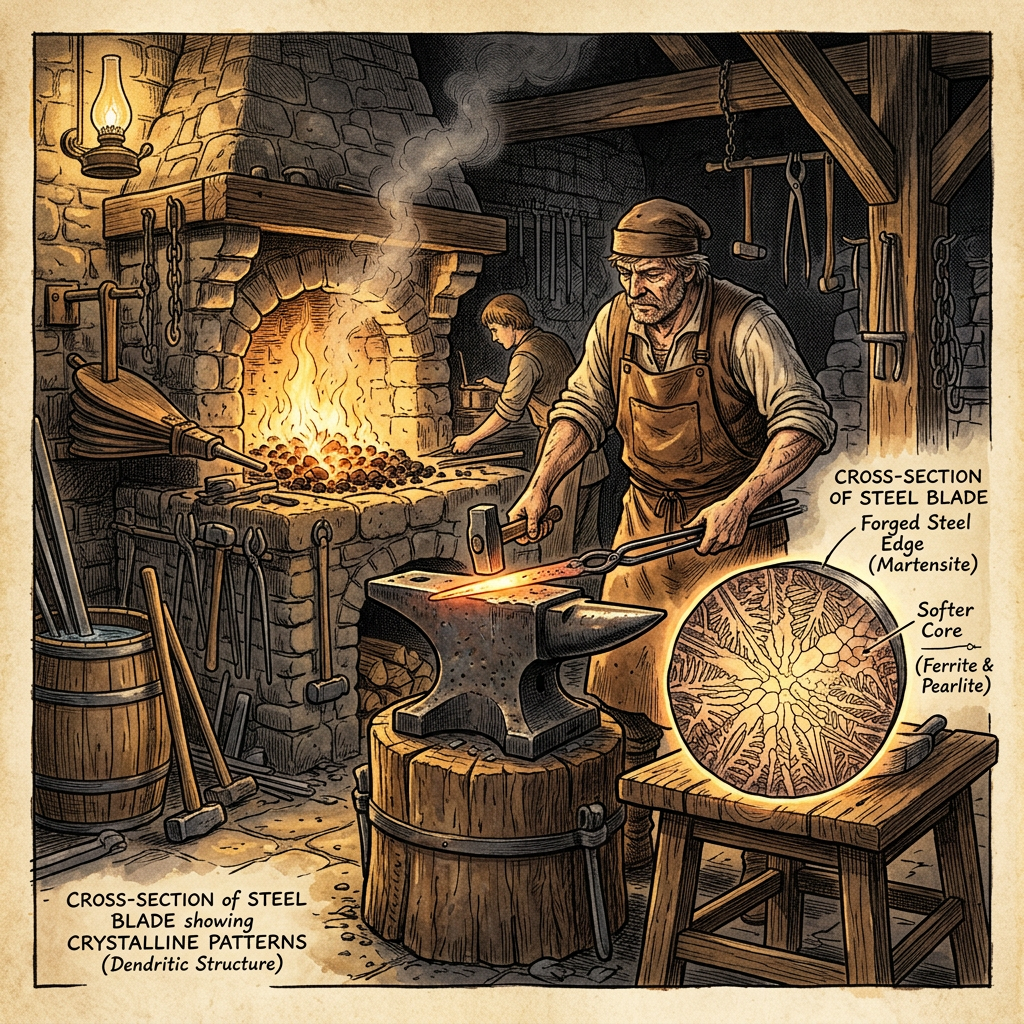
A multi-institutional study using X-ray fluorescence mapping has analyzed residues from an ancient forge in Telangana, proving that high-carbon 'Wootz' steel was being produced there as early as the 2nd century BCE. The analysis revealed a specific crucible-melting technique that allowed ancient Indian metallurgists to achieve carbon levels far superior to their contemporaries in Europe and the Middle East.
The study also identified traces of local plant matter used in the smelting process, which acted as a flux to remove impurities. This confirms that ancient Indian metallurgy was a highly scientific endeavor involving precise temperature control and chemical knowledge, fueling a global trade in high-quality blades for centuries.