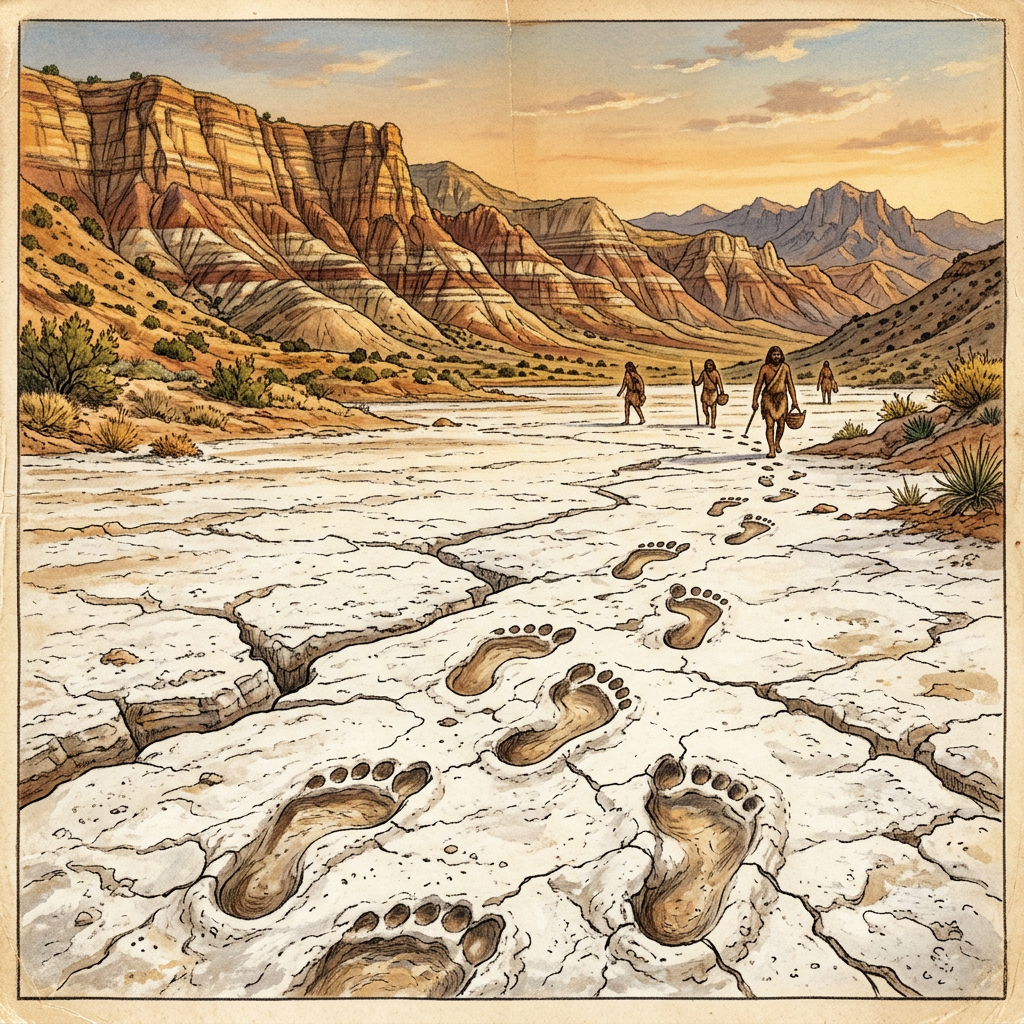
New independent dating of seed layers found within human footprints at White Sands National Park has confirmed that humans were present in North America during the Last Glacial Maximum. This evidence pushes back the timeline of human arrival in the Americas by nearly 10,000 years, challenging the long-held 'Clovis First' theory.
The study utilized carbon dating of Ruppia maritima seeds and pollen analysis to provide a robust chronological framework. The findings suggest that early hunters and gatherers successfully navigated ice-sheet barriers much earlier than previously thought possible.