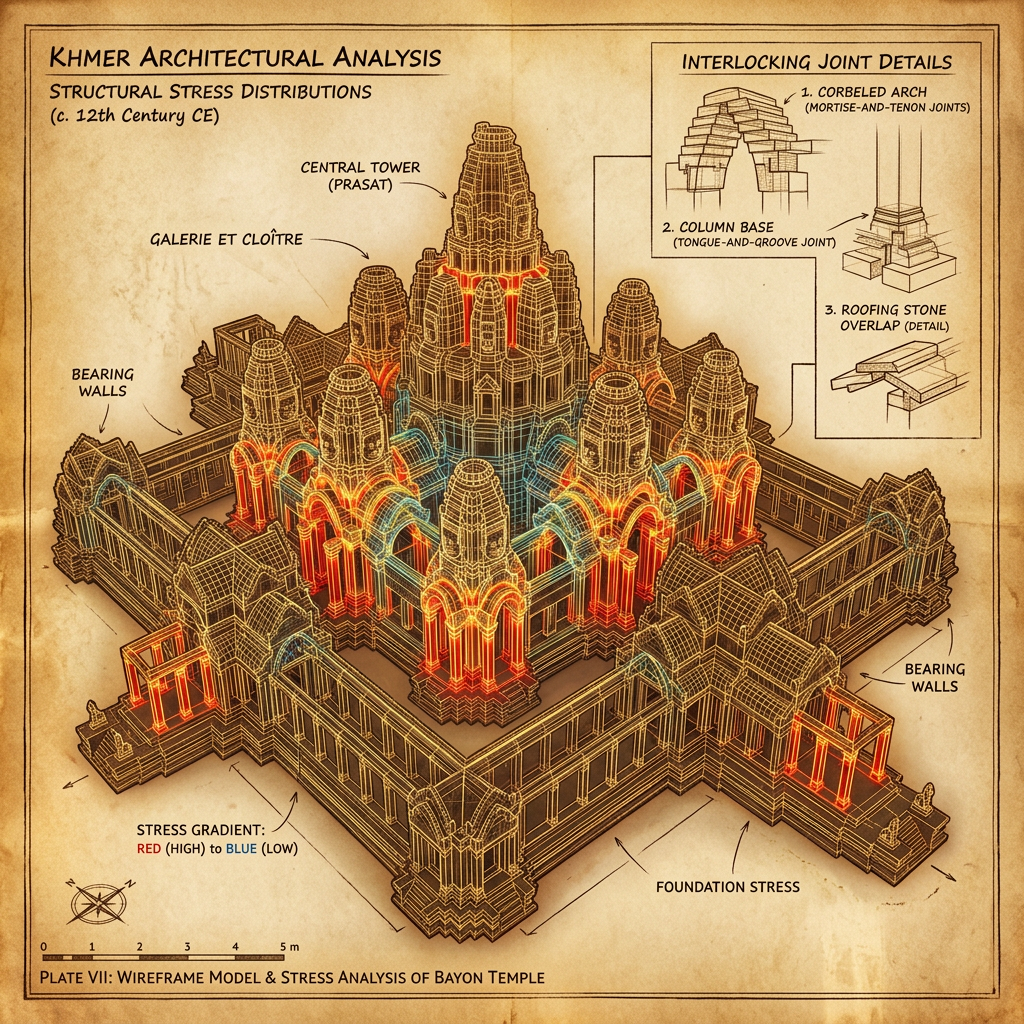
New research into the structural integrity of 9th-century stone temples in the Kashmir Valley has revealed an intentional seismic-resistant design. Using 3D stress modeling, engineers found that the dry-masonry techniques and specific interlocking joints used in these temples allow them to sway during tremors without collapsing, a feature known as 'base isolation' in modern engineering.
The study focuses on the Avantiswami Temple ruins, demonstrating how the ancient builders used lead and iron pins between stone layers to provide flexibility. This revelation underscores the advanced scientific knowledge of Sanatan architects in the Himalayan region who successfully mitigated the risks of high-intensity earthquakes.