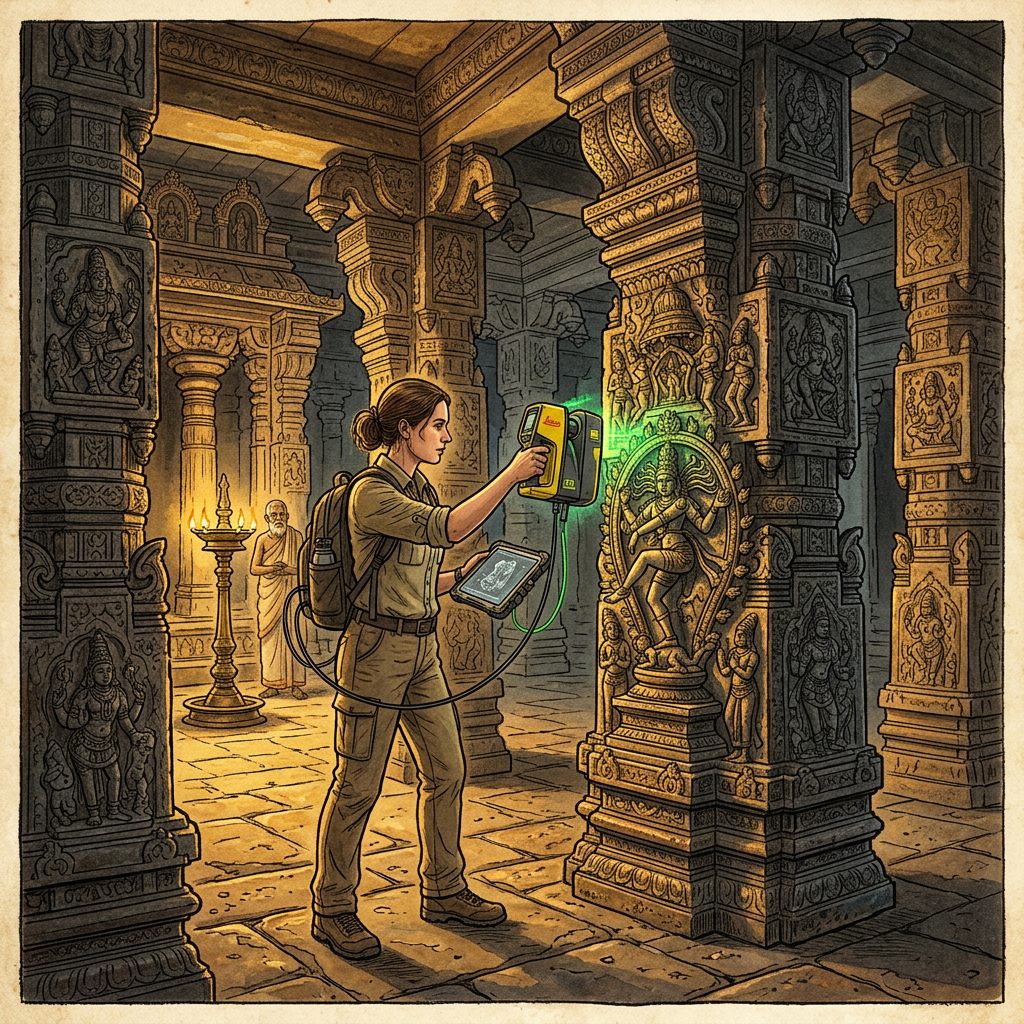
A new acoustic and structural study of the 12th-century Airavatesvara Temple in Darasuram has revealed that the famous 'musical pillars' were engineered using precise mathematical ratios to resonate at specific frequencies. Using laser vibrometry, researchers identified that the granite pillars are hollowed out with varying internal densities to produce different musical notes when struck.
The study highlights the advanced understanding of acoustic engineering possessed by Chola-era architects. These findings suggest that the temple was designed not just as a visual marvel but as a sensory experience where sound played a ritualistic role.