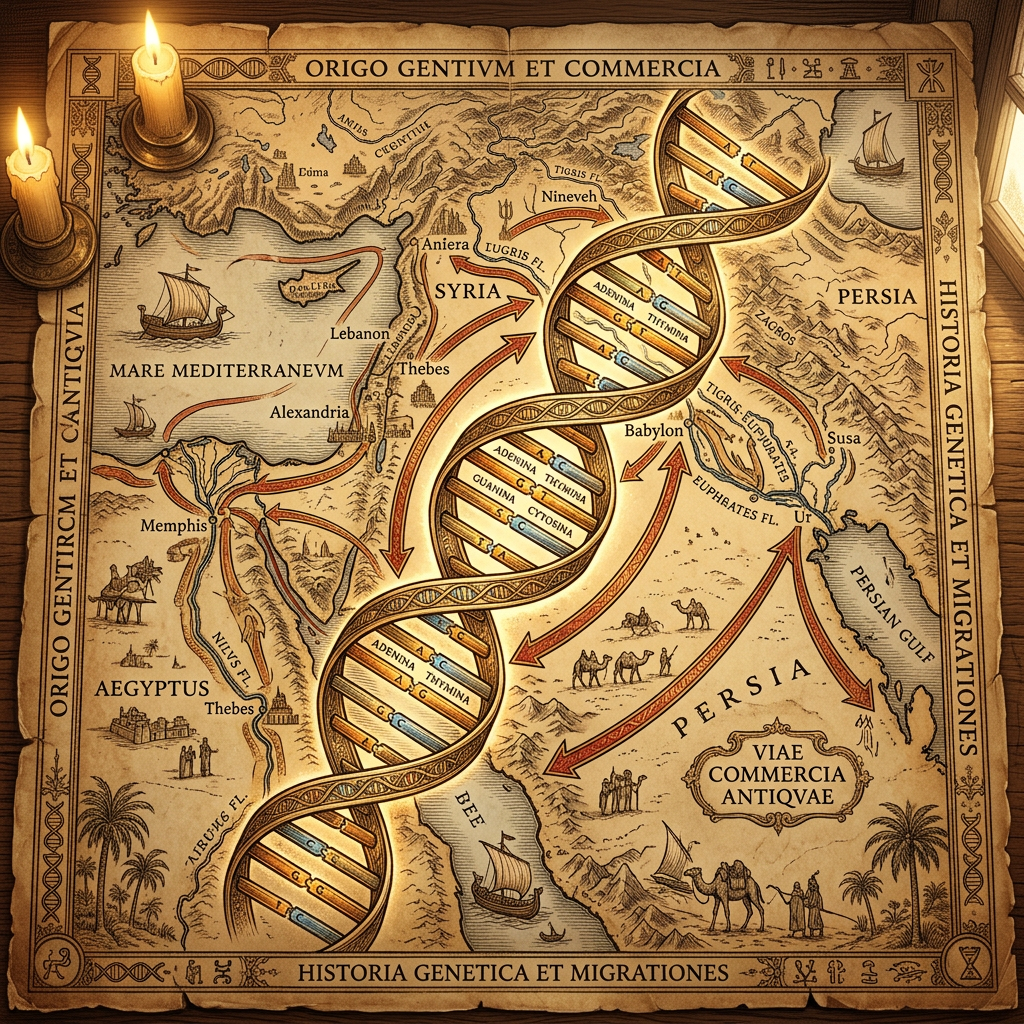
A large-scale paleogenomic study led by the Max Planck Institute has sequenced the genomes of 40 individuals from the Early Dynastic period found in the Nile Delta. The results, published in Cell, show that early Egyptians shared a significant genetic component with Neolithic farmers from the Levant and Mesopotamia, suggesting a far more integrated and mobile ancient Near East than previously believed.
The data indicates that the 'Neolithic Revolution' spread through biological migration alongside cultural exchange, with farming families moving across the Sinai to establish the foundations of the Pharaonic civilization. This research redraws the map of early Mediterranean population movements and the origins of the world's first agricultural states.