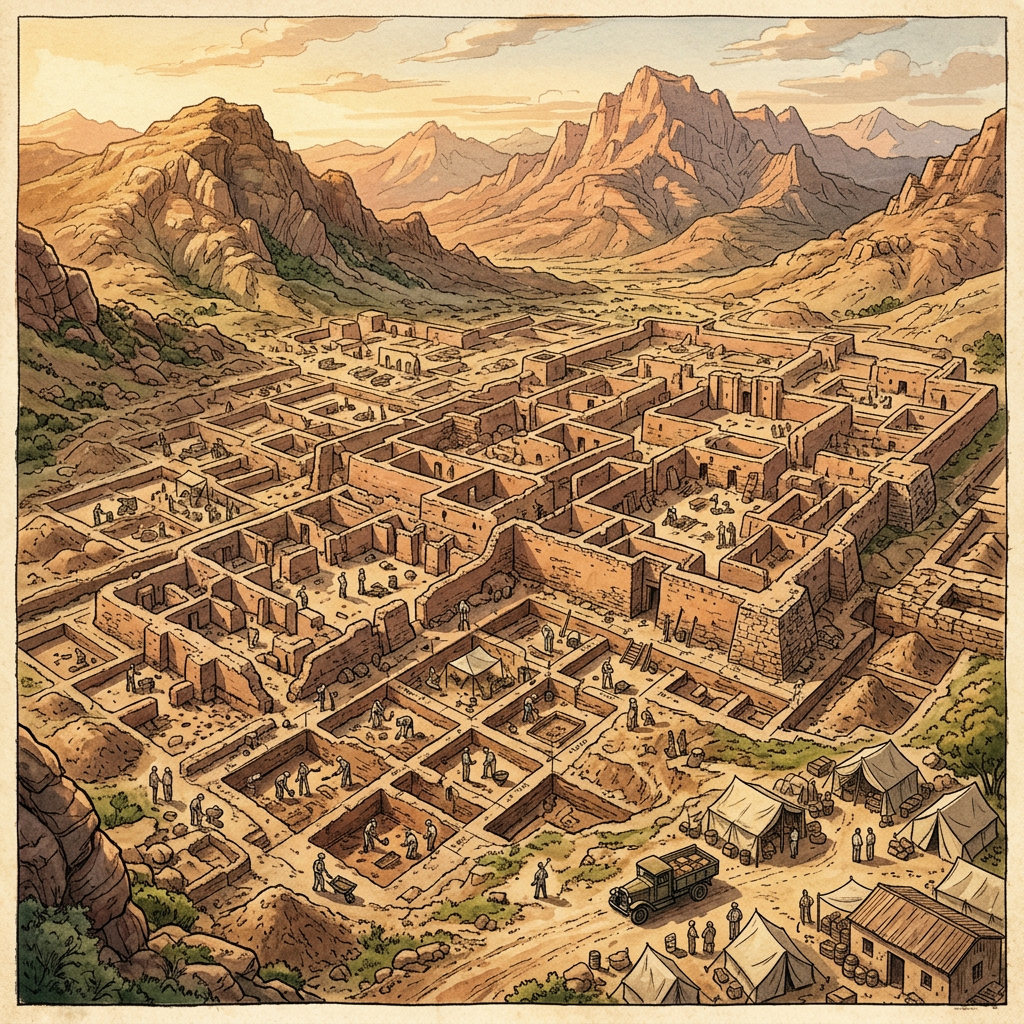
Archaeologists using satellite mapping have identified a large Neo-Assyrian administrative center in the foothills of the Lesser Caucasus mountains in Azerbaijan. The outpost, dating to the 8th century BCE, served as a strategic hub for controlling the trade of metals and horses between the Mesopotamian heartland and the Eurasian steppe.
The site features massive mud-brick fortifications and a central administrative hall containing cuneiform tablets that record economic agreements with local mountain tribes. This find significantly expands the known northern boundaries of the Assyrian Empire's economic influence during its height.