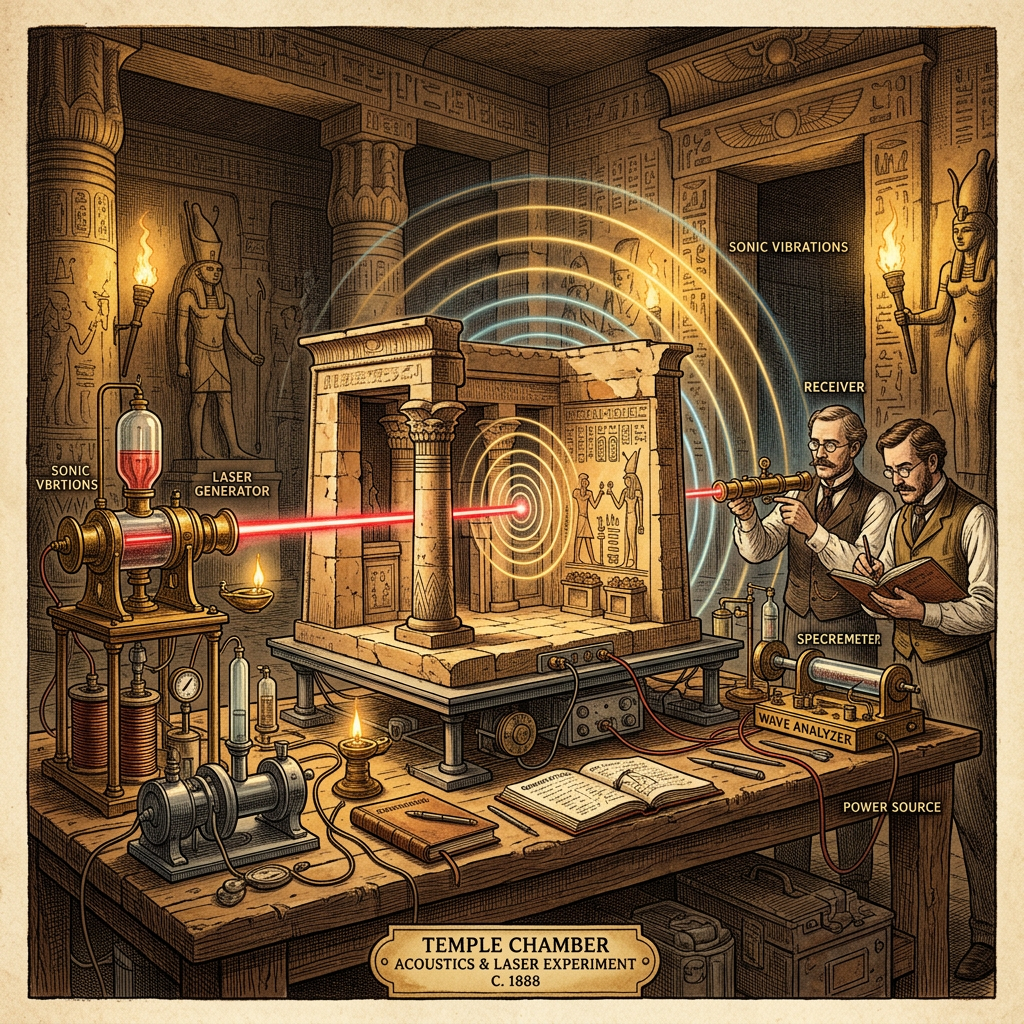
A multidisciplinary team of physicists and Sanskrit scholars has published a study validating certain acoustic principles mentioned in 12th-century Shilpa Shastra manuscripts. The study demonstrates that the precise curvature and material composition of certain temple chambers could create standing wave patterns capable of suspending small objects through sound pressure.
While the researchers clarify that this doesn't prove large-scale levitation of stone blocks, it confirms that ancient Indian architects had an advanced understanding of wave harmonics and resonant frequencies. These findings could revolutionize our understanding of how ancient builders used sound for precision placement of decorative elements in high-altitude temple ceilings.