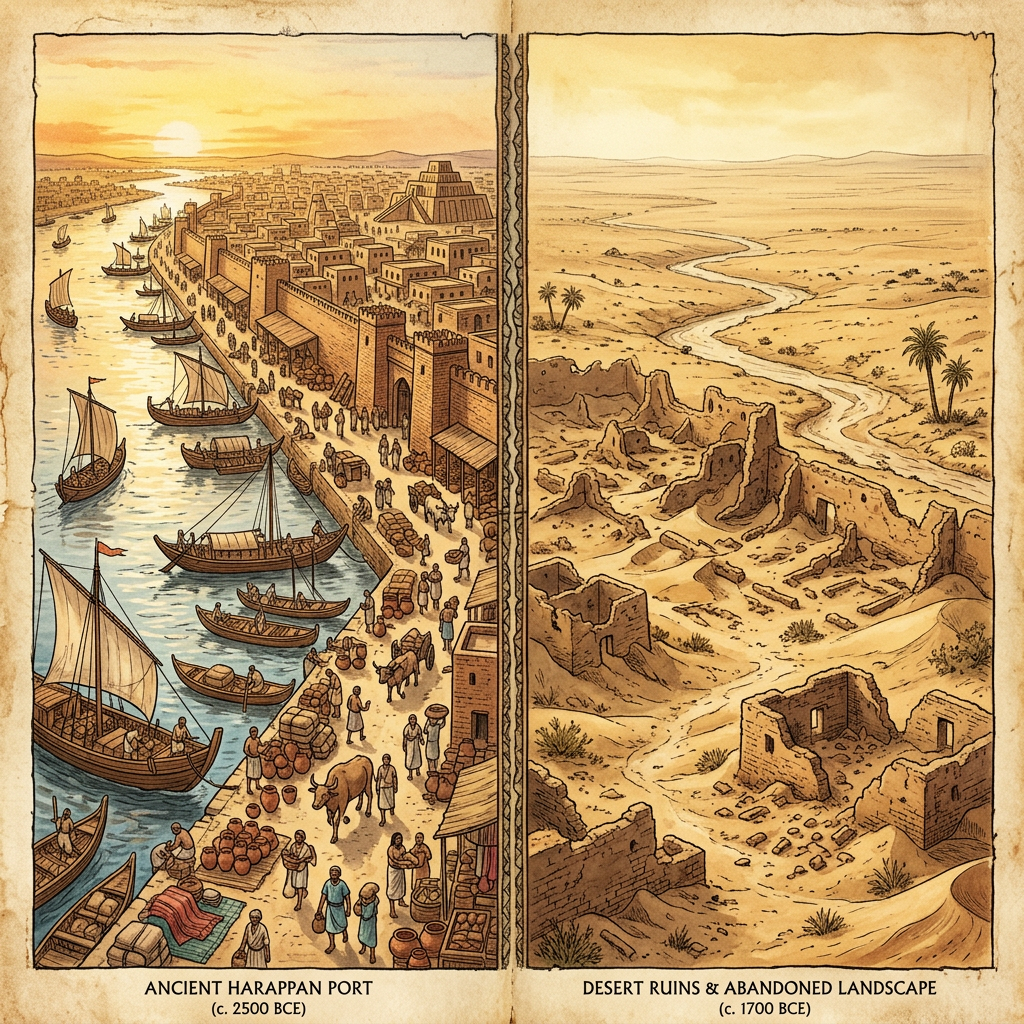
A new multidisciplinary study published in Earth and Planetary Science Letters has correlated high-resolution climate data with the abandonment of major Harappan port cities like Lothal and Dholavira. The research links a global megadrought, known as the 4.2k event, to a drastic shift in monsoon patterns that occurred around 2200 BCE.
The study utilizes stable isotope analysis from ancient seashells found in Harappan sediments, proving that a rapid increase in salinity and the drying of river deltas made maritime trade impossible. This environmental collapse forced the population to migrate inland, marking the transition from the Mature to the Late Harappan phase.