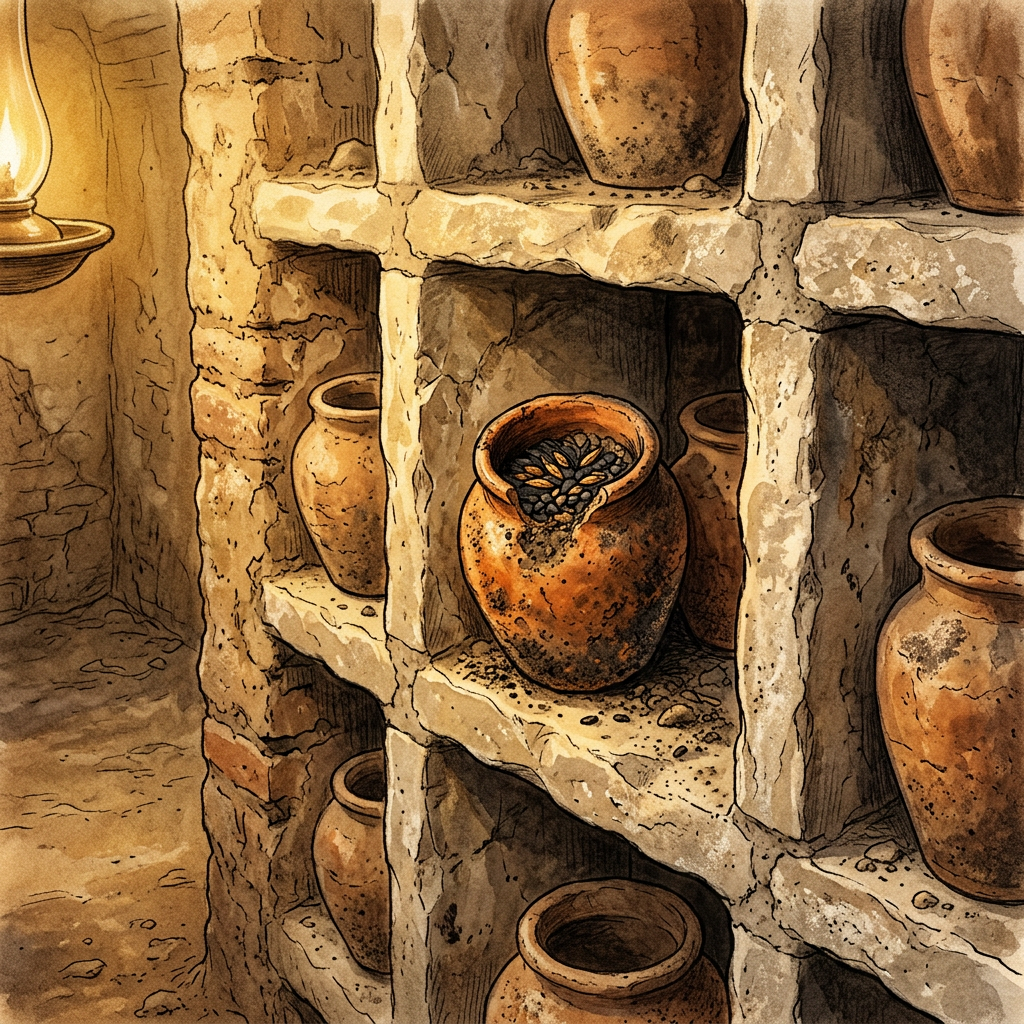
Excavations at a newly identified Harappan site in Western Rajasthan have uncovered a specialized 'Botanical Herbarium' dating back to 2500 BCE. The chamber contained a vast collection of carbonized seeds and root fragments stored in small, labeled terracotta jars. Preliminary analysis identifies several species known in Ayurvedic medicine, including ancestors of Ashwagandha and Brahmi.
This is the first time such a concentrated and organized collection of medicinal flora has been found in an Indus Valley context. The find suggests that botanical science and standardized medicine were highly developed components of Harappan urban life. The discovery is currently being cataloged by a team of archaeobotanists to understand ancient cultivation techniques.