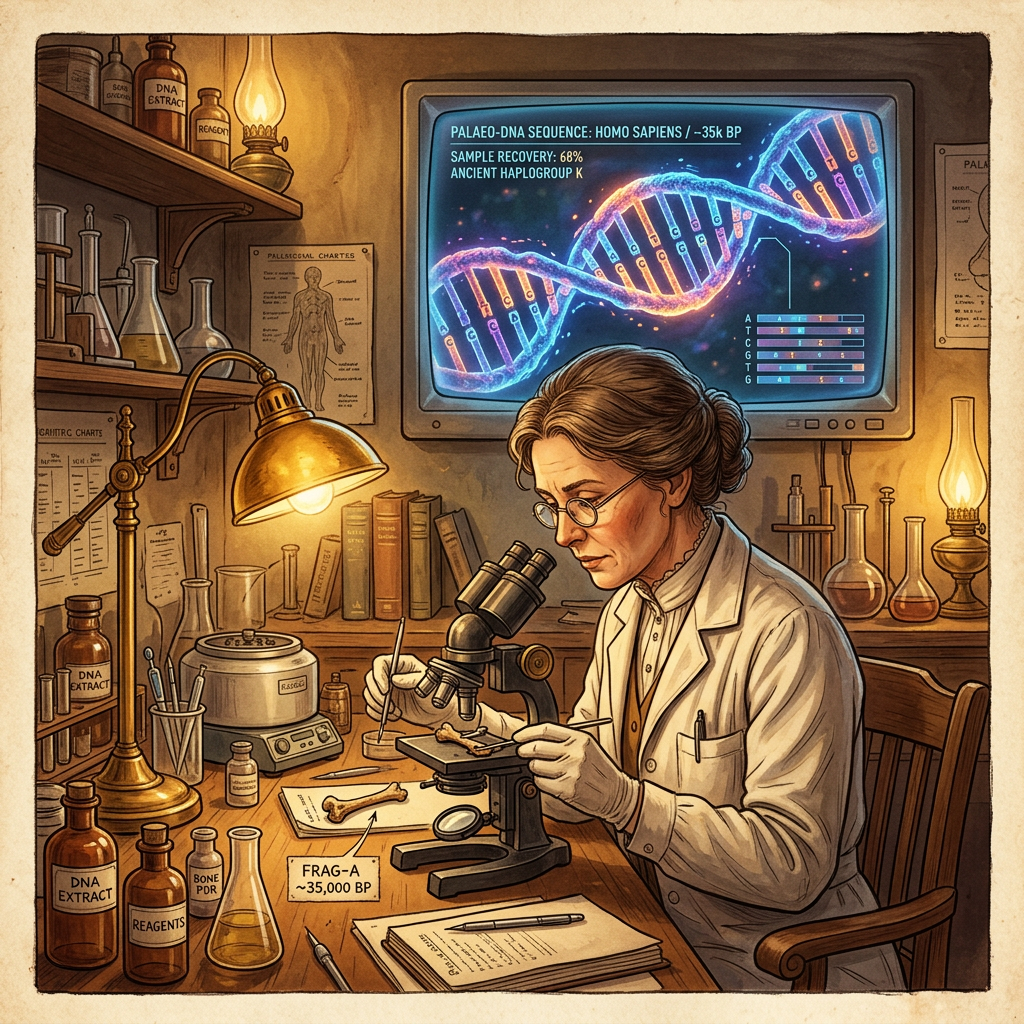
A pioneering paleogenomic study published this month has analyzed DNA from 5,000-year-old skeletal remains found at the Balathal site in Rajasthan. The research confirms that the Ahar-Banas culture inhabitants were among the first in South Asia to develop genetic markers for lactose tolerance, indicating a long-standing tradition of dairy farming and cattle domestication.
The study also revealed a high degree of genetic continuity with modern populations in the region, suggesting that these early farming communities successfully adapted to the arid environment of the Mewar plateau. This research provides a new timeline for the evolution of dietary habits in the ancient Sanatan civilization.