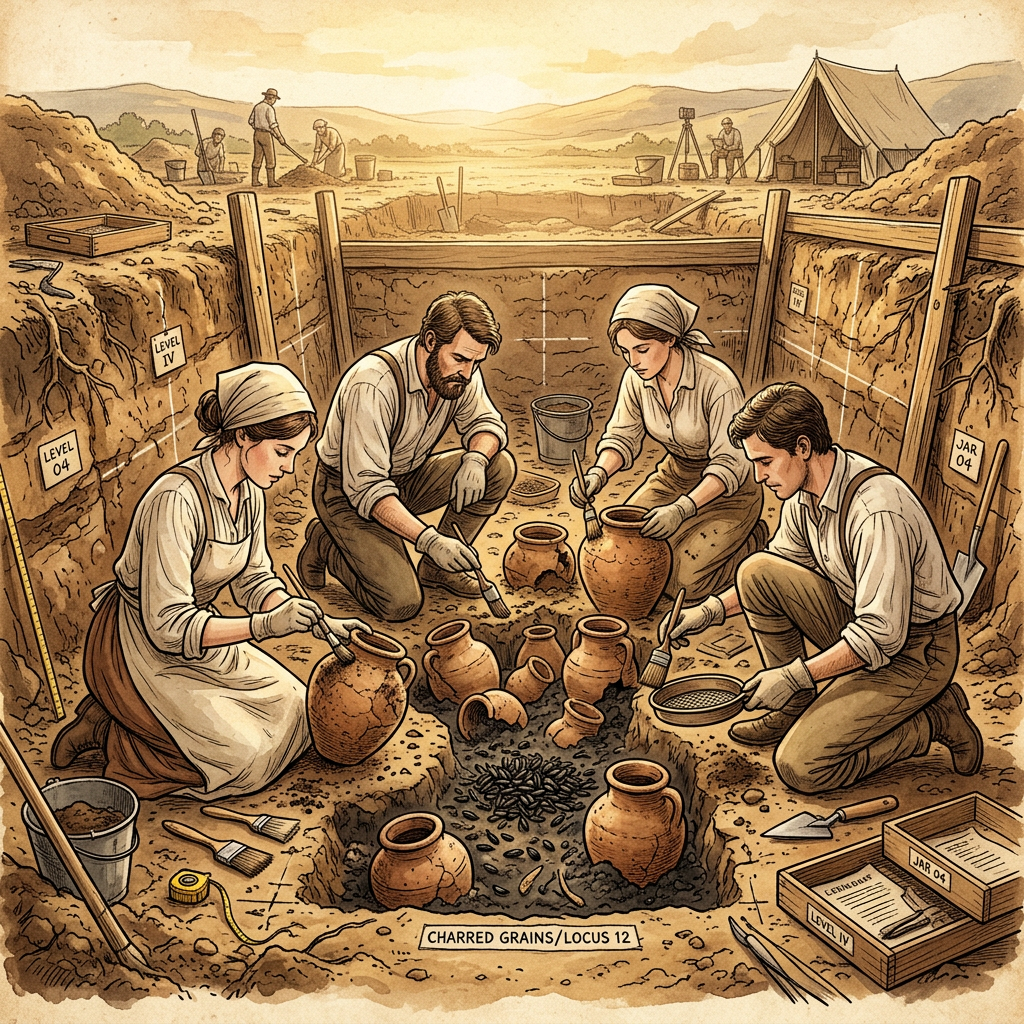
Excavations at a newly identified Harappan outpost in Haryana's Sirsa district have revealed a specialized 'Botanical Laboratory' containing carbonized seeds of extinct millet varieties. Microscopic analysis suggests that Indus Valley farmers were practicing intentional crop hybridization to develop drought-resistant strains of grains by 2400 BCE.
The site features unique terracotta sieves and specialized storage jars that indicate a systematic approach to seed selection and preservation. This finding challenges the notion that Harappan agriculture was purely subsistence-based, suggesting instead a highly organized scientific approach to food security that allowed the civilization to thrive in varying climatic conditions.