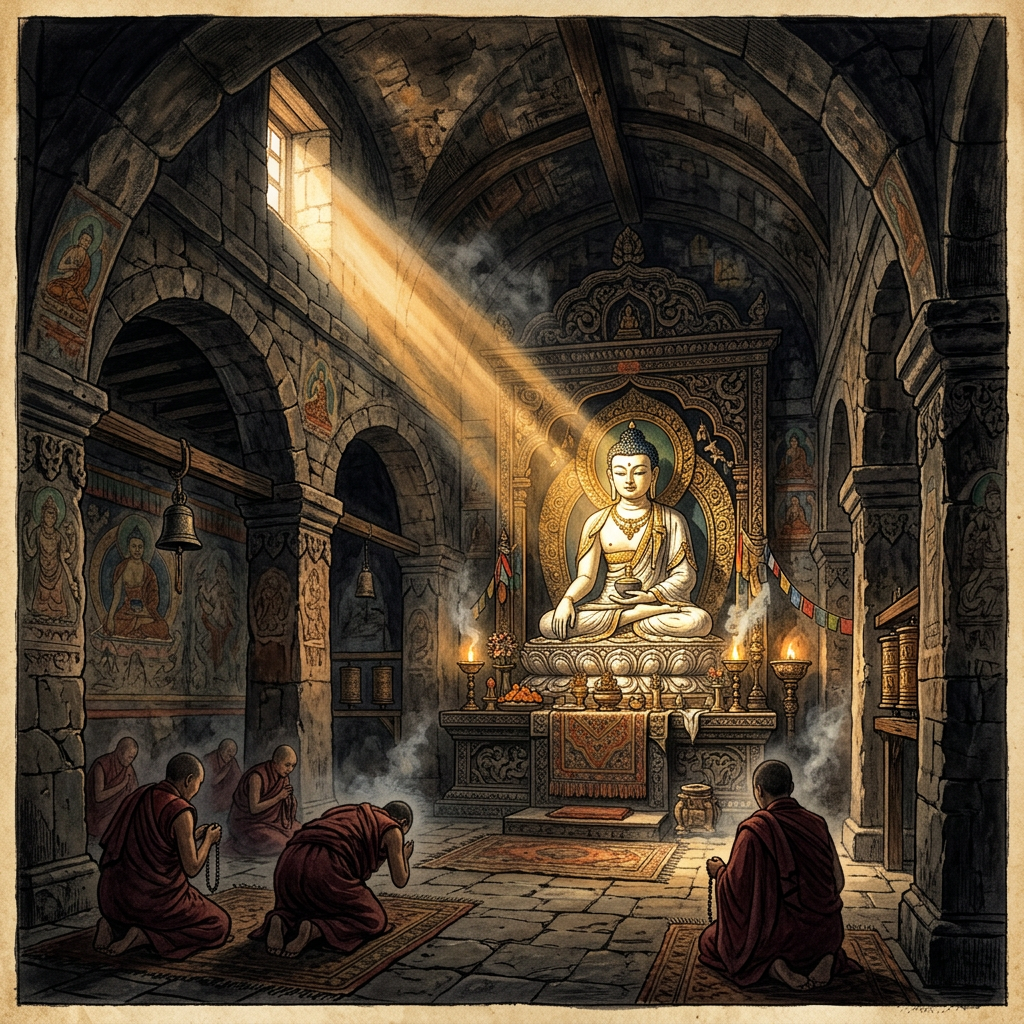
During a routine infrastructure survey in Northern Bengal, archaeologists have stumbled upon a subterranean Buddhist Vihara dating back to the 3rd century CE. The monastic complex features a central courtyard surrounded by meditation cells, several of which contain exceptionally preserved stucco sculptures of Bodhisattvas with distinct Gandharan stylistic influences.
This discovery is significant as it provides evidence of a flourishing Buddhist tradition in the sub-Himalayan belt much earlier than documented. The presence of specialized drainage tunnels and ventilated study halls suggests that the monastery was designed for year-round habitation in a region with high monsoon rainfall, reflecting advanced Indo-Gangetic engineering principles.