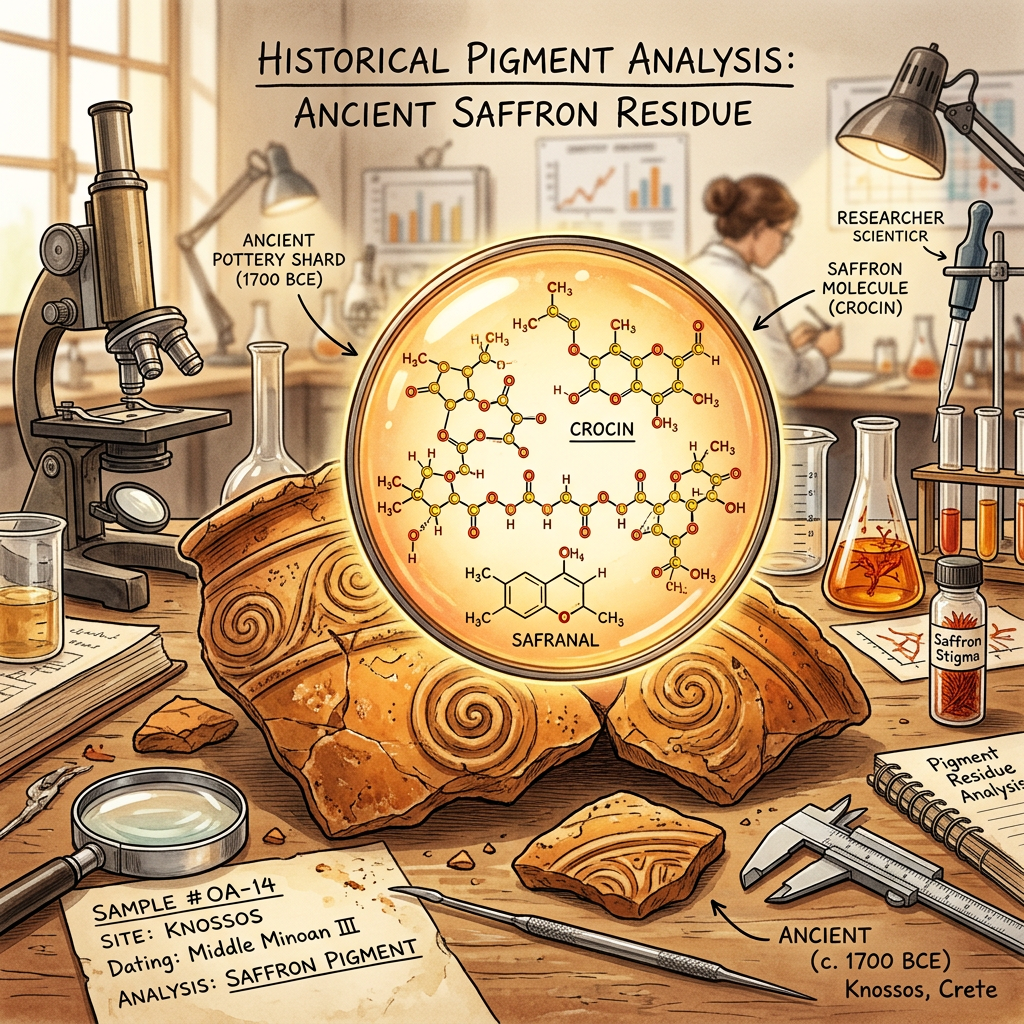
New research led by the Indian Institute of Science and archaeological teams in Haryana has identified the earliest chemical evidence of saffron cultivation and usage in the Indian subcontinent. Through high-resolution mass spectrometry, scientists analyzed the interior residue of OCP fragments dating back to 1100 BCE, uncovering specific metabolites of Crocus sativus.
This discovery suggests that the Vedic-era communities of the Saraswati-Yamuna doab were not only proficient in high-temperature ceramic firing but also had established a sophisticated botanical trade network with high-altitude regions. The presence of saffron, which was previously thought to be introduced much later, pushes back the history of this valuable spice in Sanatan heritage by nearly a millennium.