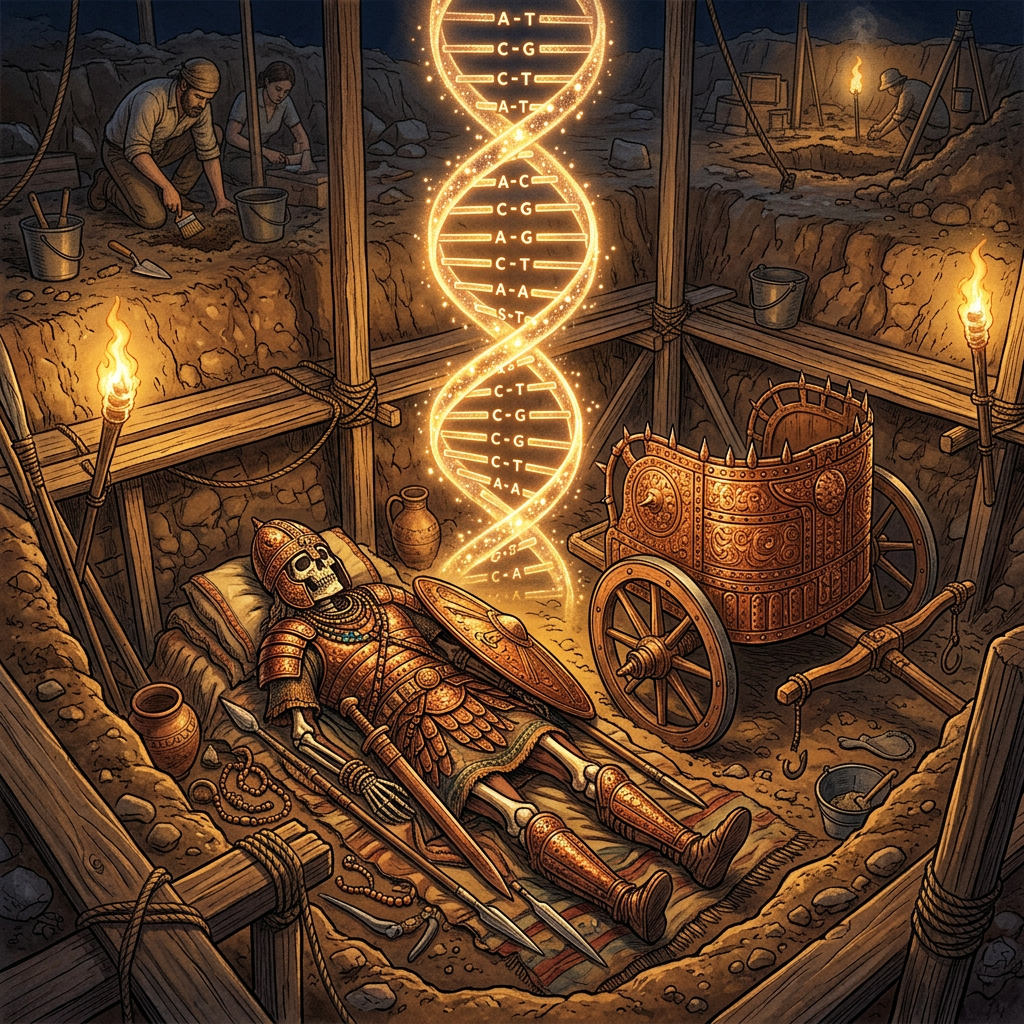
A breakthrough paleogenomic study published in Nature Genetics has analyzed the first successful DNA sequences from the 2000 BCE Sinauli burial site. The data reveals that the inhabitants belonged to a distinct genetic lineage that shows a high degree of continuity with modern agricultural communities in the Ganga-Yamuna plains, while also possessing markers associated with high-mobility pastoralists.
This research provides definitive biological evidence that the 'warrior culture' of Sinauli—characterized by its chariots and copper weaponry—was a local evolution rather than a sudden foreign influx. The study further clarifies the complex demographic tapestry of ancient India during the transition from the Mature Harappan to the Vedic period.