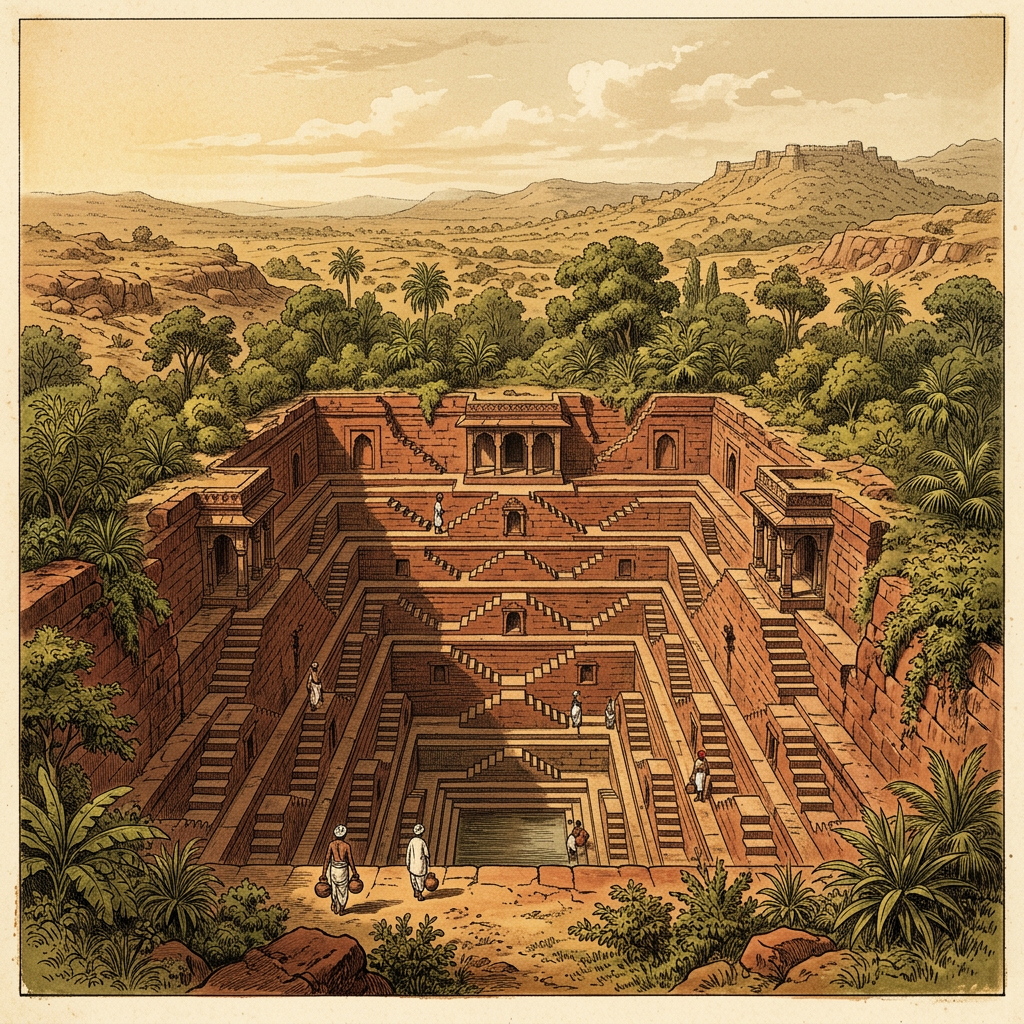
The UNESCO World Heritage Committee has officially added the unique network of laterite step-reservoirs found across the Northern Deccan to its priority list. These structures, dating primarily from the 5th to 8th centuries CE, represent a revolutionary hydraulic system that allowed the Vakataka and early Rashtrakuta dynasties to manage seasonal water scarcity through subterranean filtration.
Unlike the better-known stepwells of Rajasthan, these Deccan reservoirs utilize the porous nature of laterite stone to create natural aquifers. The designation aims to mobilize international funding for the restoration and structural stabilization of these often-overlooked engineering marvels of ancient India.