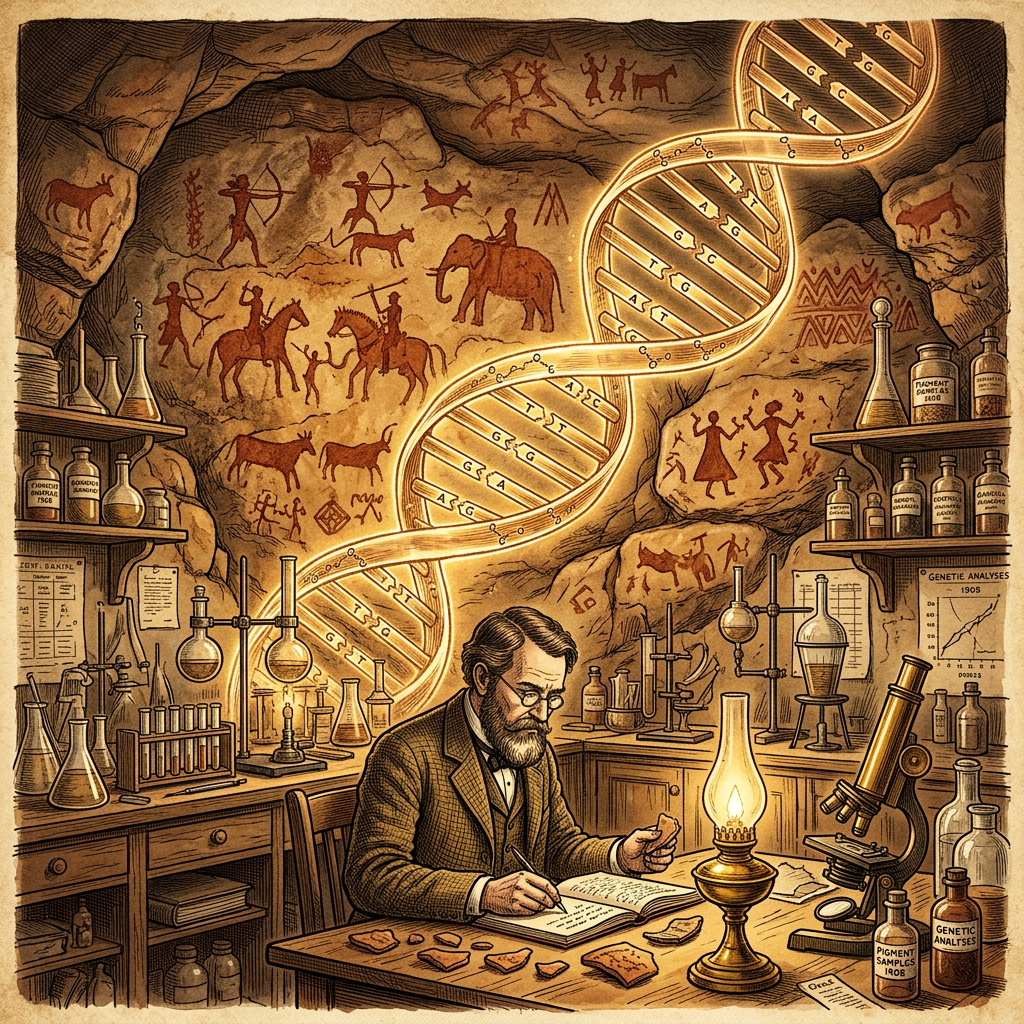
A landmark genomic study led by the Birbal Sahni Institute of Palaeosciences has successfully sequenced DNA from human remains found at the Bhimbetka rock shelters, dating back to 6,000 BCE. The research reveals that the hunter-gatherers of the Mesolithic era in Central India share a direct genetic lineage with modern-day tribal and agrarian communities in the region. This proves a high degree of local genetic continuity over eight millennia, despite multiple waves of later migrations.
The study also identified genetic markers associated with resistance to tropical pathogens, suggesting that the ancient inhabitants had already adapted to the subcontinental environment long before the advent of agriculture. This data provides a scientific foundation for the 'indigenous development' model of ancient Indian civilization and offers a clearer picture of the biological roots of the Sanatan population.