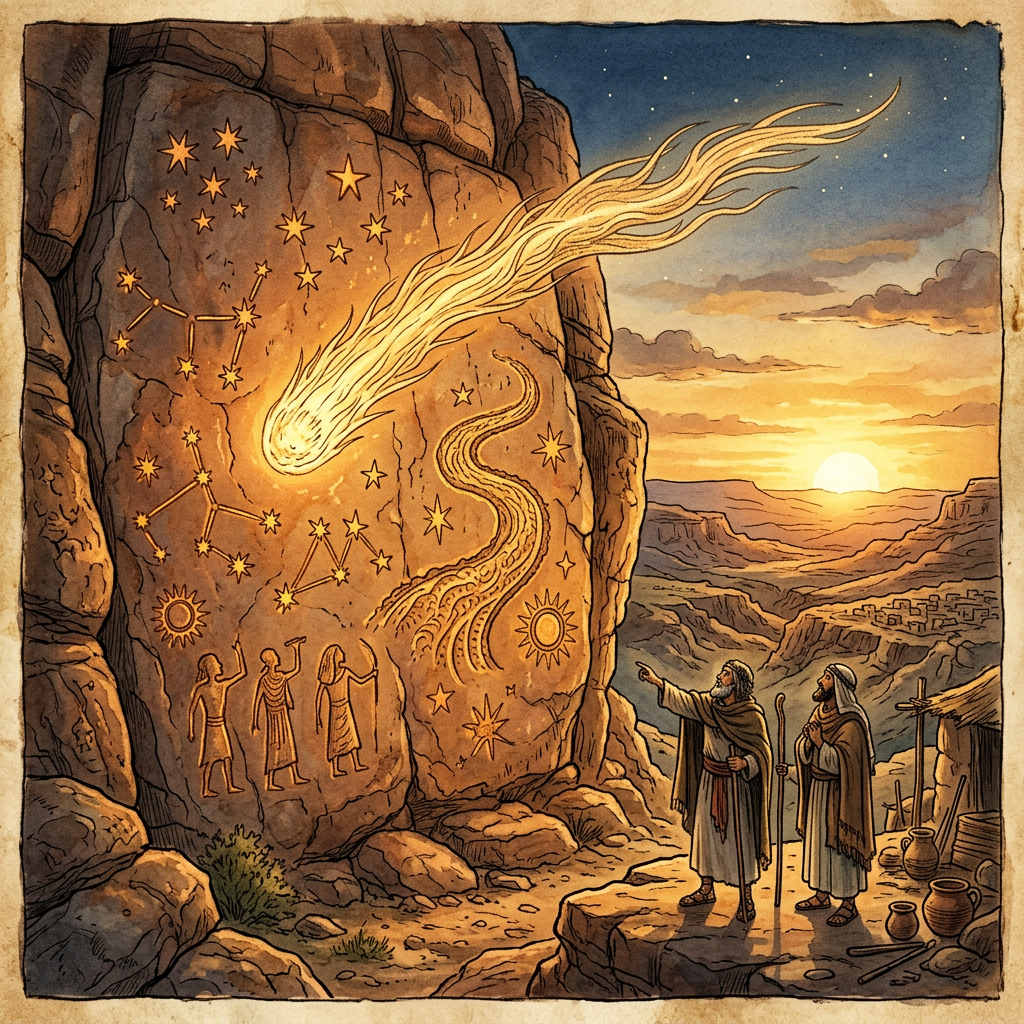
Deep within the Satpura Range of Central India, explorers have found a vast rock art gallery containing petroglyphs that appear to represent celestial events. Most striking among the carvings are detailed depictions of 'long-tailed stars' or comets, which researchers have dated to approximately 15,000 years ago using lichenometry and stylistic analysis.
The orientation of the rock face suggests it was used as a prehistoric observatory, with specific carvings aligning with the rising sun during the winter solstice. This find indicates that Paleolithic humans in the Indian subcontinent possessed a complex system of astronomical tracking and symbolic recording.