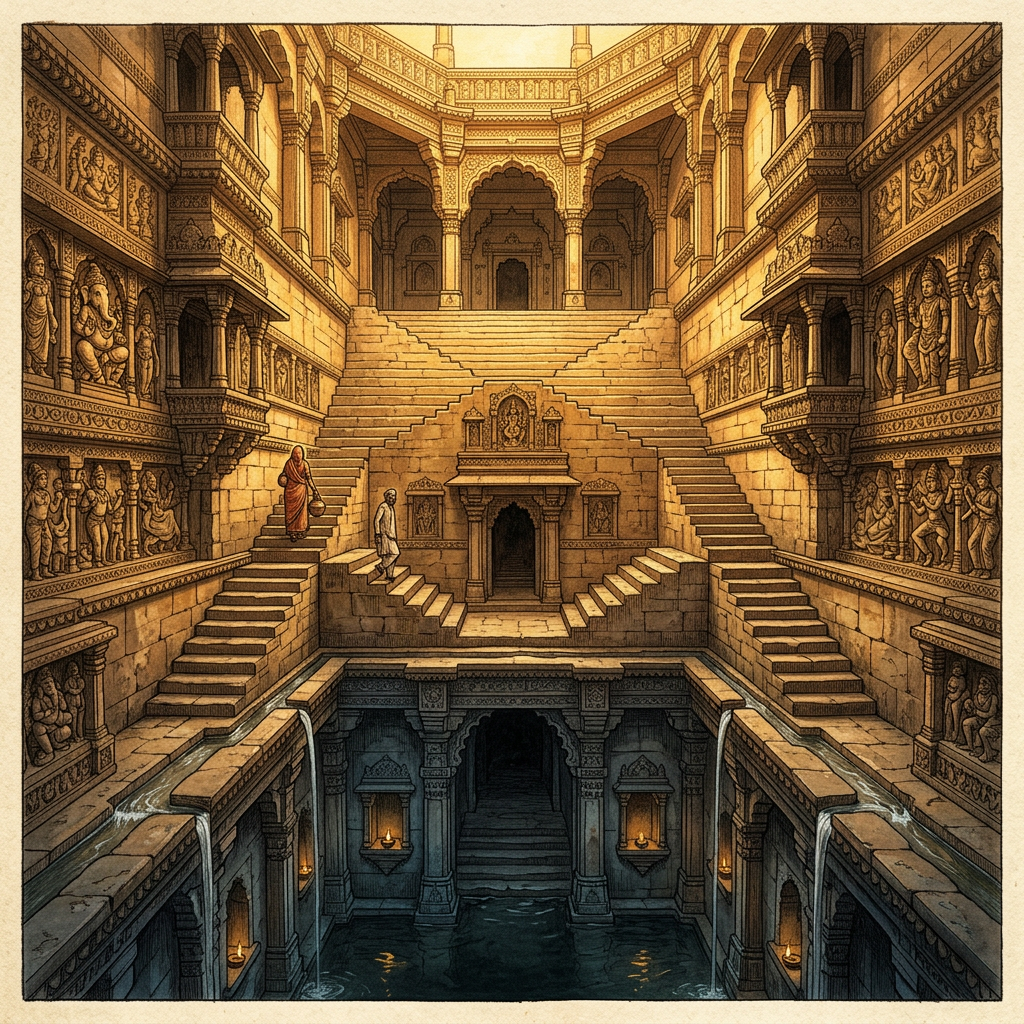
During the restoration of a 10th-century Gurjara-Pratihara dynasty stepwell in the Gwalior district, conservationists discovered a series of hidden subterranean chambers equipped with a unique hydraulic cooling system. These 'Sheetala-Ghars' (Cooling Rooms) were cooled by a network of sluice gates that allowed water to circulate through the stone walls, lowering the internal temperature by up to 15 degrees Celsius compared to the surface.
The stepwell, which had been partially filled with debris for centuries, also revealed rare stone friezes depicting Varuna (the deity of water) and advanced irrigation methods of the early medieval period. This architectural discovery highlights the mastery of hydro-thermal engineering in ancient India, where spiritual spaces were seamlessly integrated with functional climate-control systems.