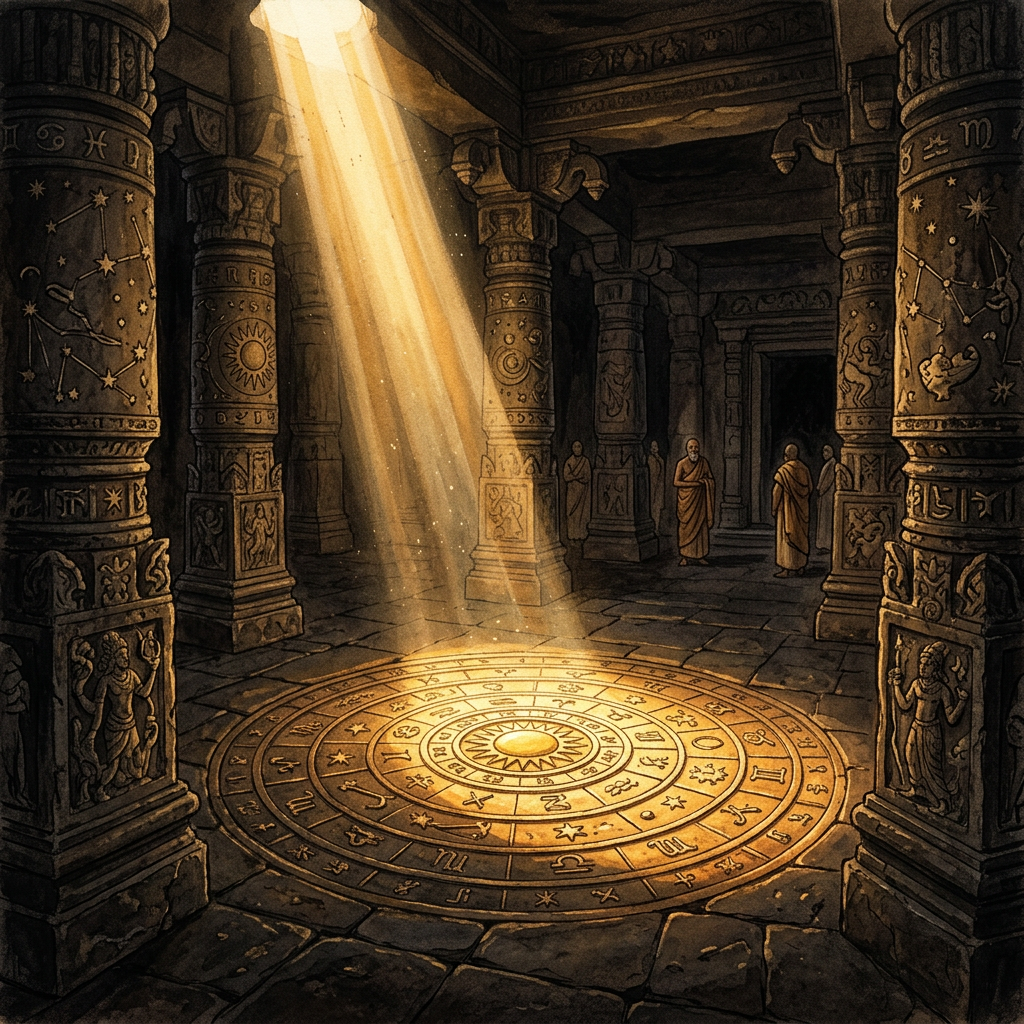
During the restoration of a remote 8th-century temple in the Chota Nagpur plateau, conservationists discovered a precisely carved 'Shunya-Bindu' (Zero-Point) marker on the floor of the inner sanctum. The temple, which exhibits a rare fusion of Pala and Kalinga architectural styles, appears to have been designed as a geodetic reference point. The marker is perfectly aligned with the summer solstice sunset, and a series of copper tubes embedded in the stone walls allow for precise astronomical observations of the lunar nodes.
This 'calibration point' indicates that ancient temple architects were also master surveyors, using religious structures as fixed benchmarks for land measurement and regional mapping. The site has now been proposed for protected status as it bridges the gap between ritual architecture and scientific instrumentation.