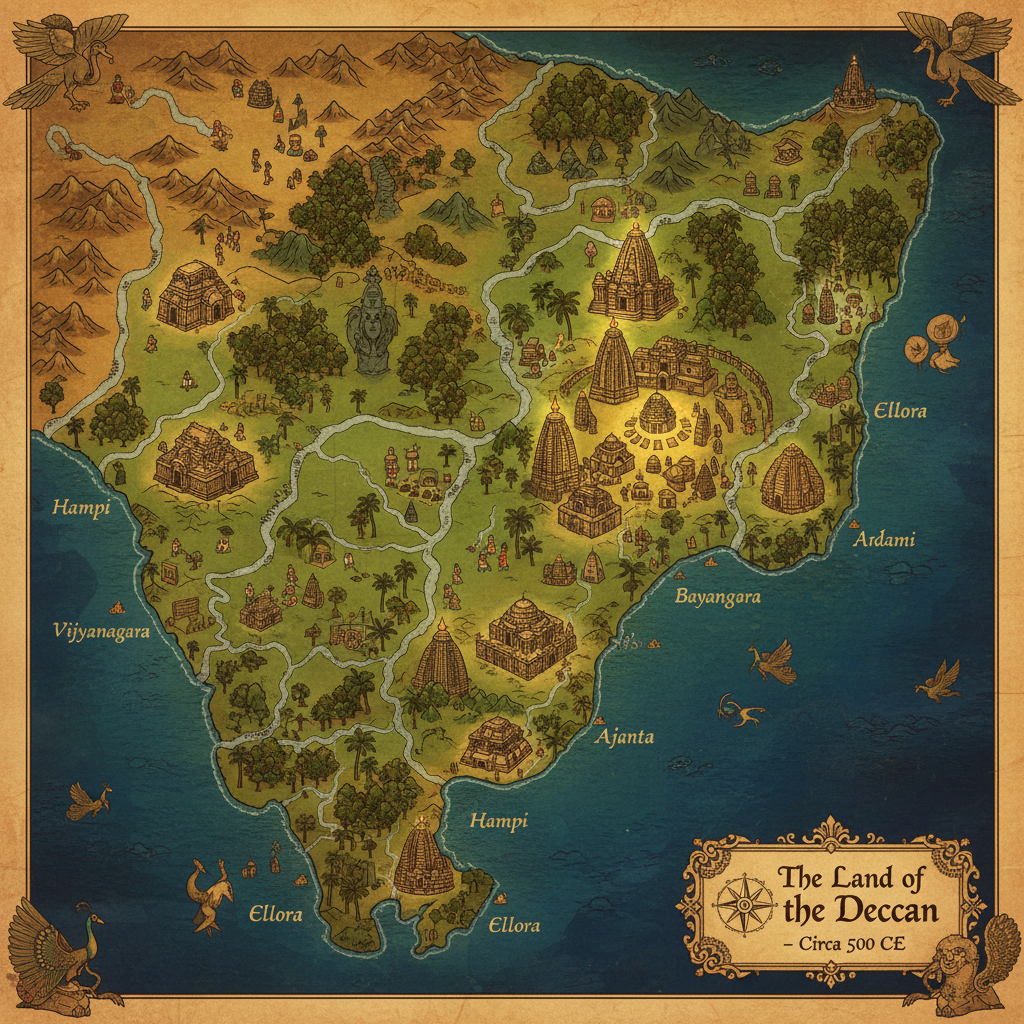
New research combining paleoclimatology and archaeological data has linked the rapid expansion of the Satavahana Empire in the 2nd-century CE to a prolonged period of exceptionally stable and high-yield monsoon cycles. By analyzing stalagmites from caves in the Deccan Plateau, scientists reconstructed a climate map showing a 100-year 'monsoon surplus'.
This favorable climate provided the agricultural surplus necessary for the Satavahanas to fund their massive rock-cut architectural projects at Karle and Ajanta and their extensive maritime trade with the Roman Empire. The study offers a new perspective on how environmental stability underpinned the golden ages of ancient Sanatan civilizations.