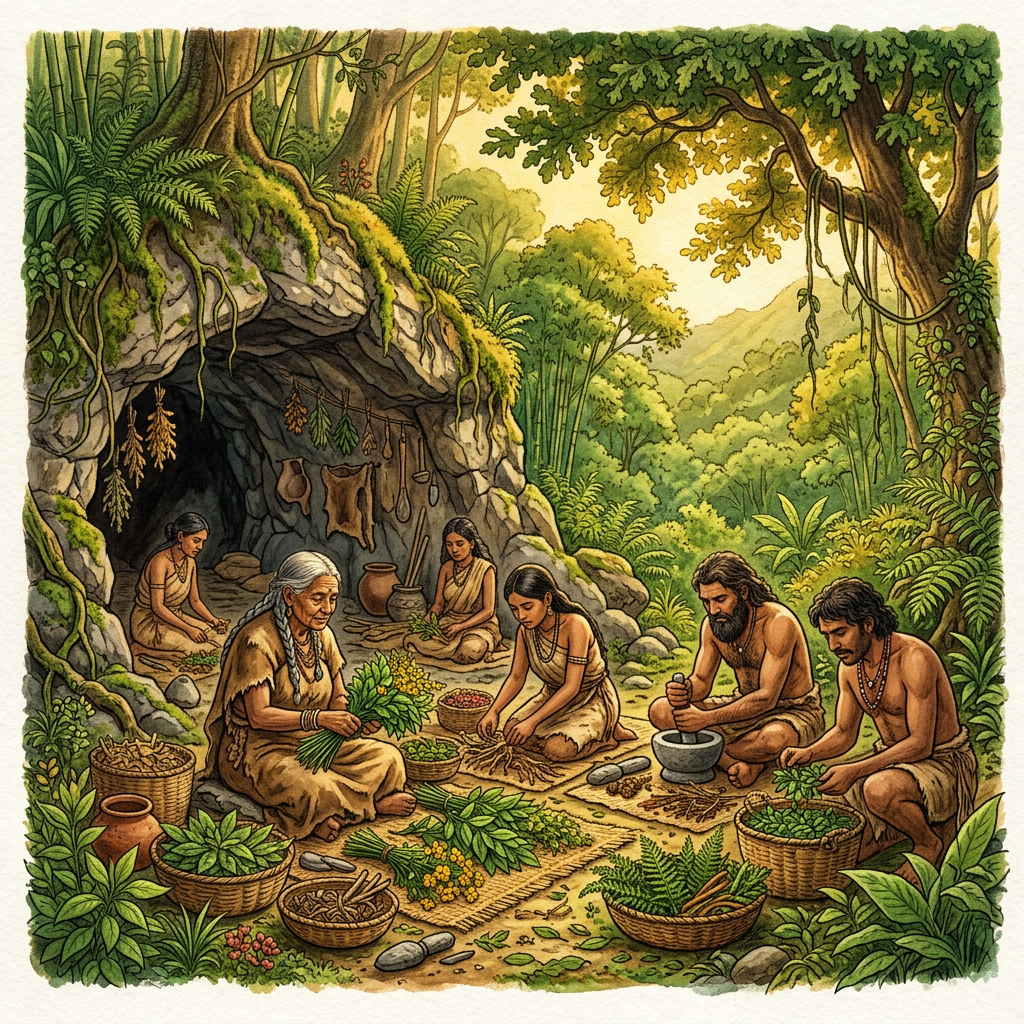
A breakthrough genomic study published in Nature Heritage has sequenced the DNA of individuals found in a remote Nilgiri cave, dating back to 5000 BCE. The research reveals a specific genetic signature linked to the early cultivation and medicinal selection of endemic herbs, providing the earliest biological evidence for Sanatan medicinal traditions in the region.
The study highlights that these ancient inhabitants were not merely hunter-gatherers but active horticulturalists who developed specific plant hybrids for anti-inflammatory treatments. This palaeogenomic data suggests a much deeper antiquity for the foundational knowledge that would eventually be codified in the Charaka Samhita and other Ayurvedic texts.