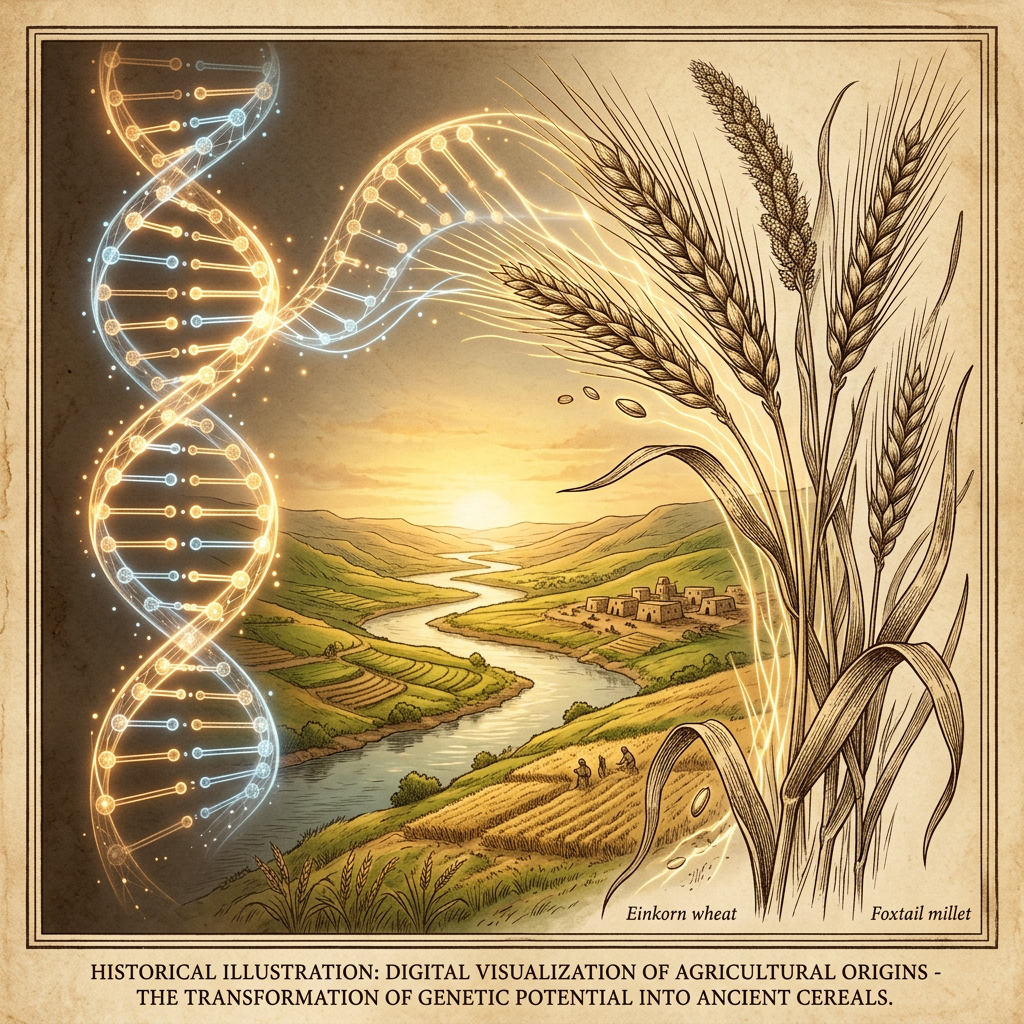
A breakthrough research paper published in Nature Genetics reveals the genomic analysis of human remains found in the Ganges-Yamuna Doab, dating back to 7,000 BCE. The study, led by the Birbal Sahni Institute of Palaeosciences, identifies a specific genetic marker associated with the efficient digestion of high-fiber ancient millets and wild grains, predating the rise of settled agriculture in the region.
The data suggests that these early inhabitants possessed a resilient gut microbiome and metabolic adaptations that allowed them to thrive on the diverse flora of the alluvial plains. This research provides the first direct evidence that the ancestors of modern North Indians underwent significant evolutionary shifts to adapt to the specific dietary landscape of the Indo-Gangetic basin thousands of years before the Indus Valley Civilization.