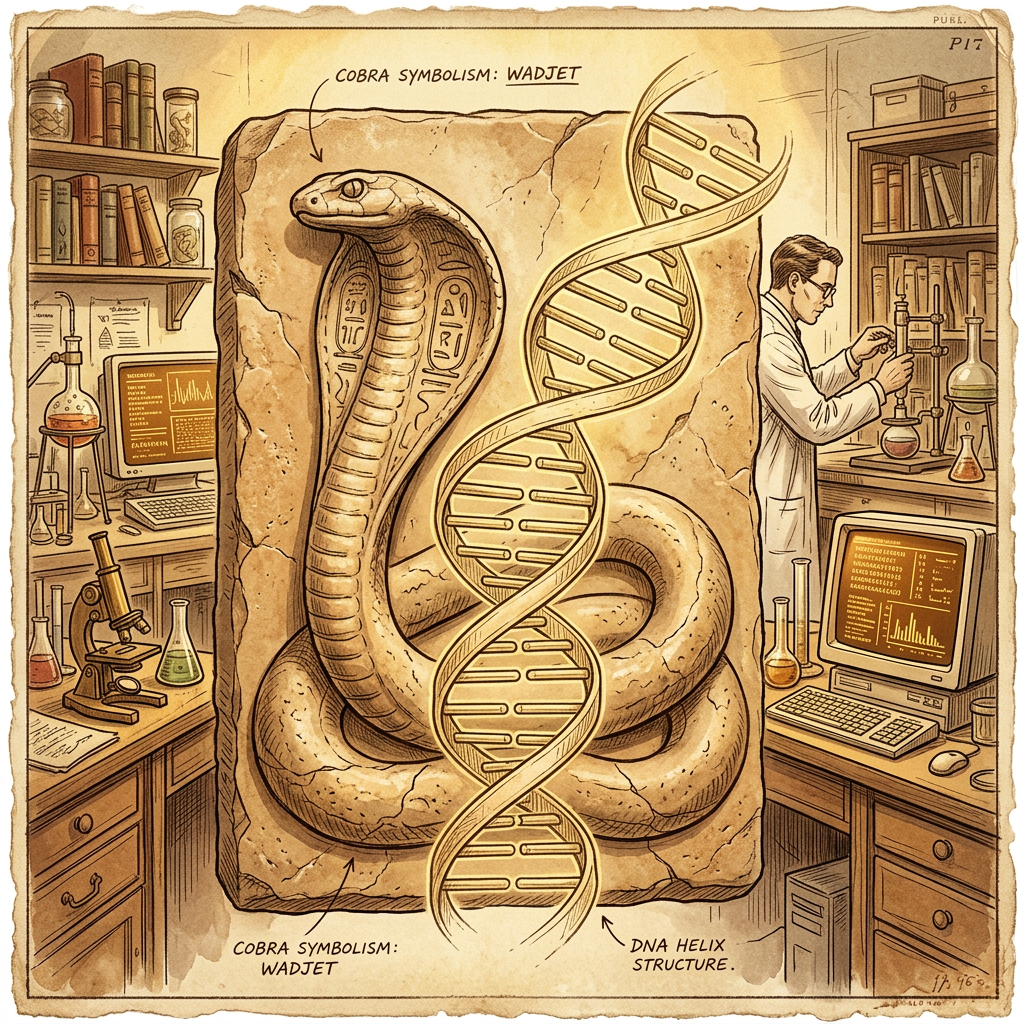
A groundbreaking paleogenomic study published in Nature Genetics has analyzed the DNA of individuals from a late-Neolithic settlement in the Godavari Basin. The research identifies a specific genetic mutation related to the PLA2 gene family, which provided our ancestors with a natural resilience to the neurotoxic proteins found in cobra venom.
This evolutionary adaptation suggests that the early inhabitants of Central India developed unique biological defenses due to their frequent interaction with venomous reptiles in the prehistoric riverine forests. The study correlates these findings with early Naga-themed petroglyphs found nearby, indicating a profound cultural and biological relationship with snakes dating back 5,000 years.