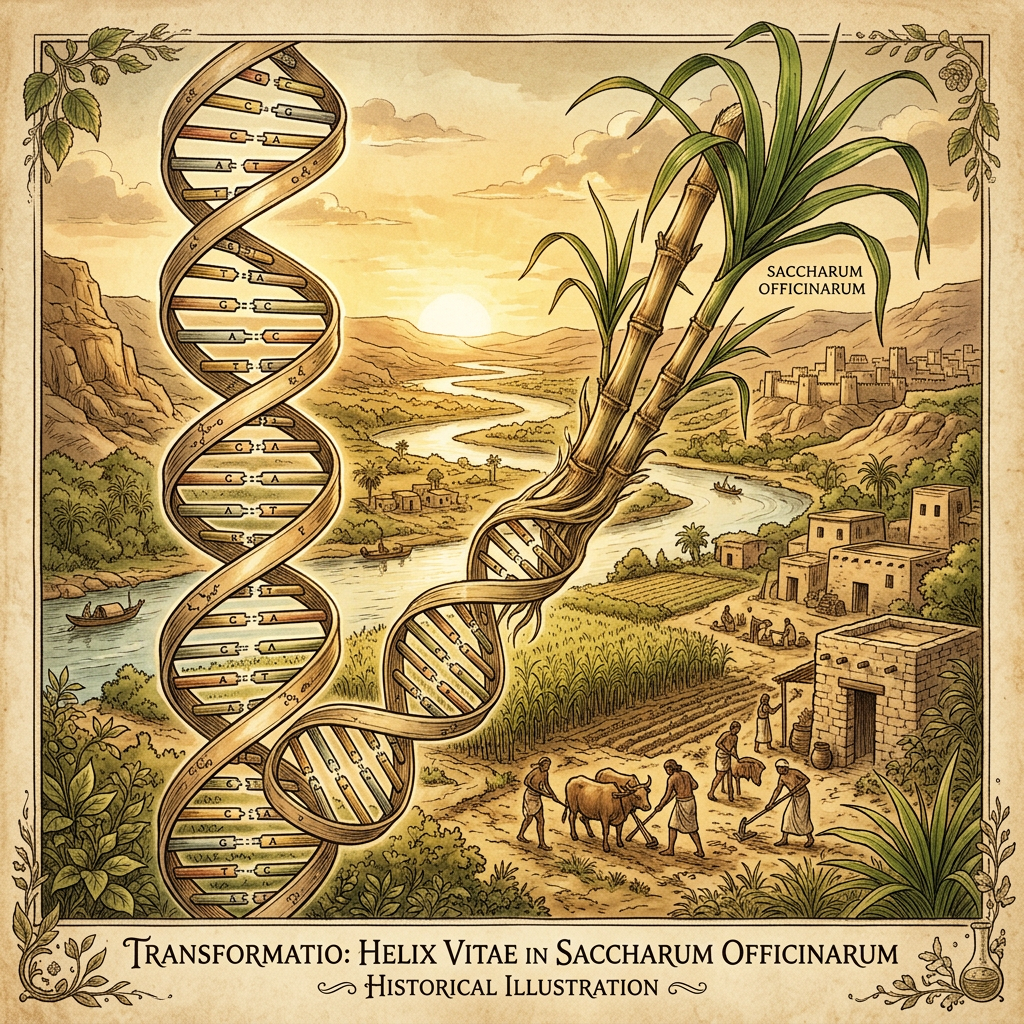
A peer-reviewed genomic study published this week has identified specific DNA markers for glucose metabolism in 3,500-year-old skeletal remains from the Kuru-Panchala region. The findings suggest that ancient Indian populations in the Gangetic plain were the first in the world to genetically adapt to a diet high in processed sugarcane (Ikshu), predating similar adaptations in other regions by nearly two millennia.
The research, conducted by a global consortium of paleogenomicists, suggests that the large-scale cultivation of sugarcane mentioned in Rigvedic and Atharvavedic texts led to a significant evolutionary shift. This study redefines our understanding of ancient Indian agriculture as a driver of human biological evolution.