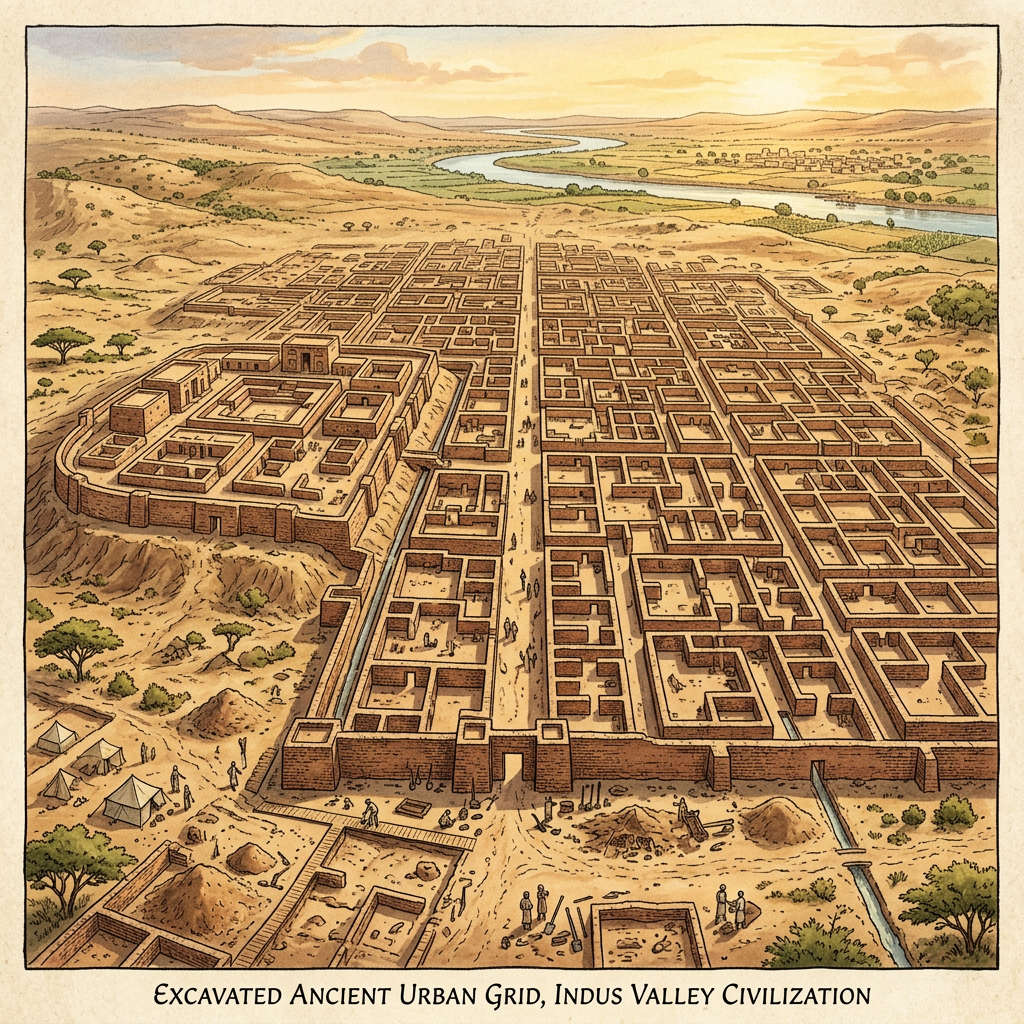
Archaeologists from the Archaeological Survey of India (ASI) have announced the discovery of a significant new settlement layer in the Mansa district of Punjab. The site, dating back to roughly 2500 BCE, features a sophisticated grid-based urban layout, complete with baked-brick structures and an expansive administrative center that suggests a highly organized regional governing body during the mature Harappan phase.
The excavation has also yielded a collection of unique terracotta seals and ivory weights, which researchers believe were used for standardized trade across the Saraswati-Indus corridor. This finding reinforces the theory of decentralized but interconnected industrial hubs that specialized in agricultural logistics and textile production for export to Mesopotamia.