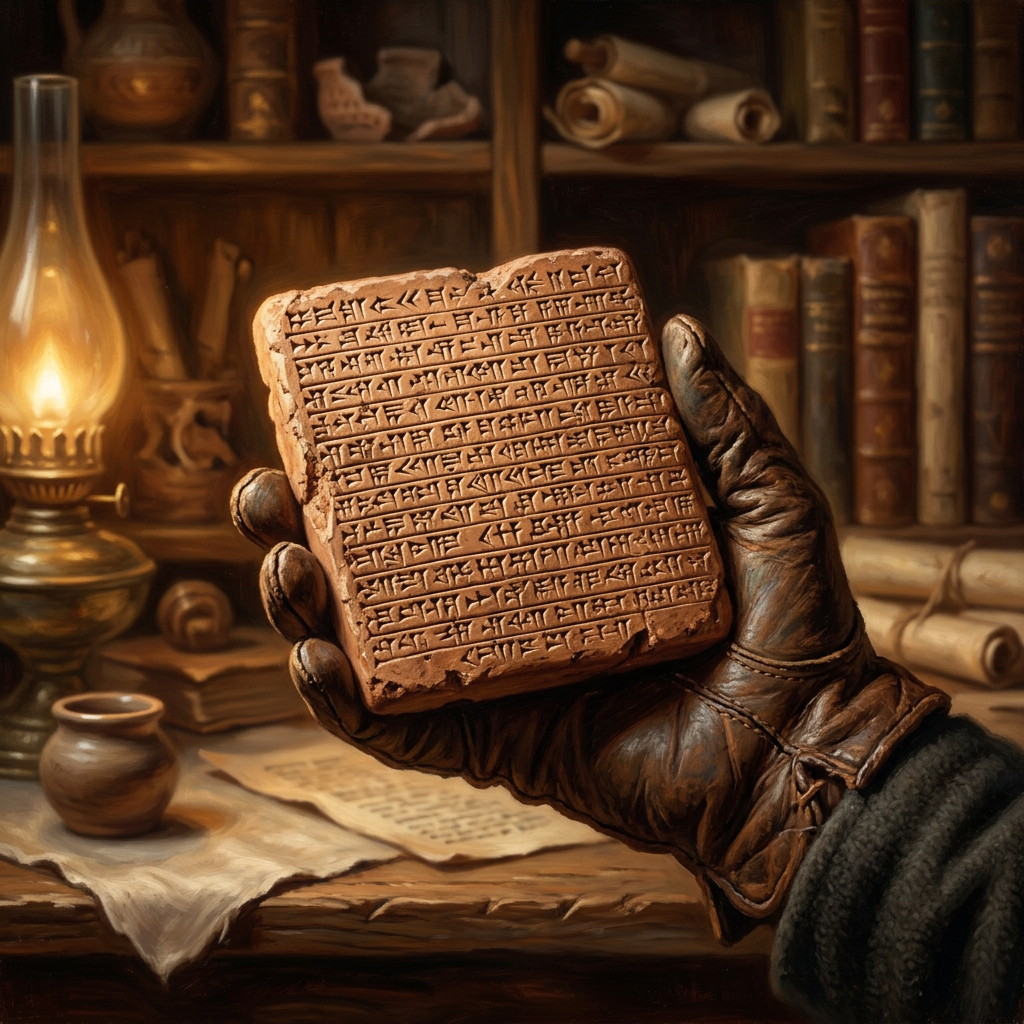
Archaeologists excavating the administrative quarter of the Sumerian city of Girsu have uncovered a remarkably well-preserved archive of cuneiform tablets. One tablet, dated to the 18th century BCE, is a formal 'commercial contract' between a local temple official and a guild of Meluhhan merchants for the regular supply of indigo dye and finished ivory carvings.
This document is the first of its kind to name a specific Indian merchant guild operating in Mesopotamia. It details the exchange rates for silver and specifies that the indigo must meet a certain quality standard, proving the existence of sophisticated international trade laws and quality-control systems between the Harappan civilization and the Near East nearly 4,000 years ago.