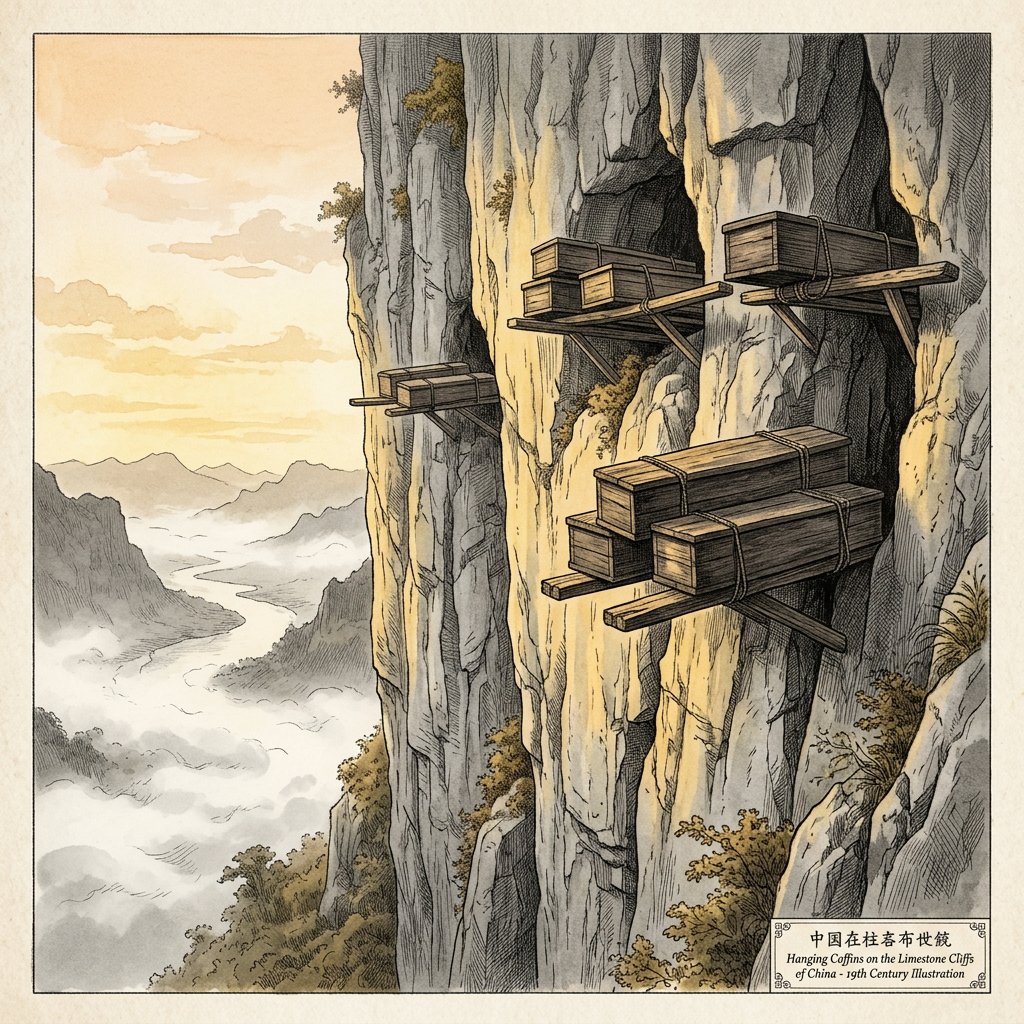
New genetic research has confirmed that the enigmatic tradition of 'hanging coffins'—caskets displayed on steep cliff faces—was first practiced by the ancestors of the Bo people in southern China. Testing of human remains from four major sites established that this unique funerary ritual began approximately 3,000 years ago. The Bo, a group that largely disappeared by the 16th century, maintained this tradition as a core part of their cultural and spiritual identity.
The study resolves long-standing questions about the origins of this visually striking practice, which was believed to protect the dead and bring them closer to the heavens. By linking the DNA to specific cliff-dwelling communities, archaeologists can now map the spread of this ritual across Southeast Asia and better understand the social structures that supported such labor-intensive ceremonial traditions.