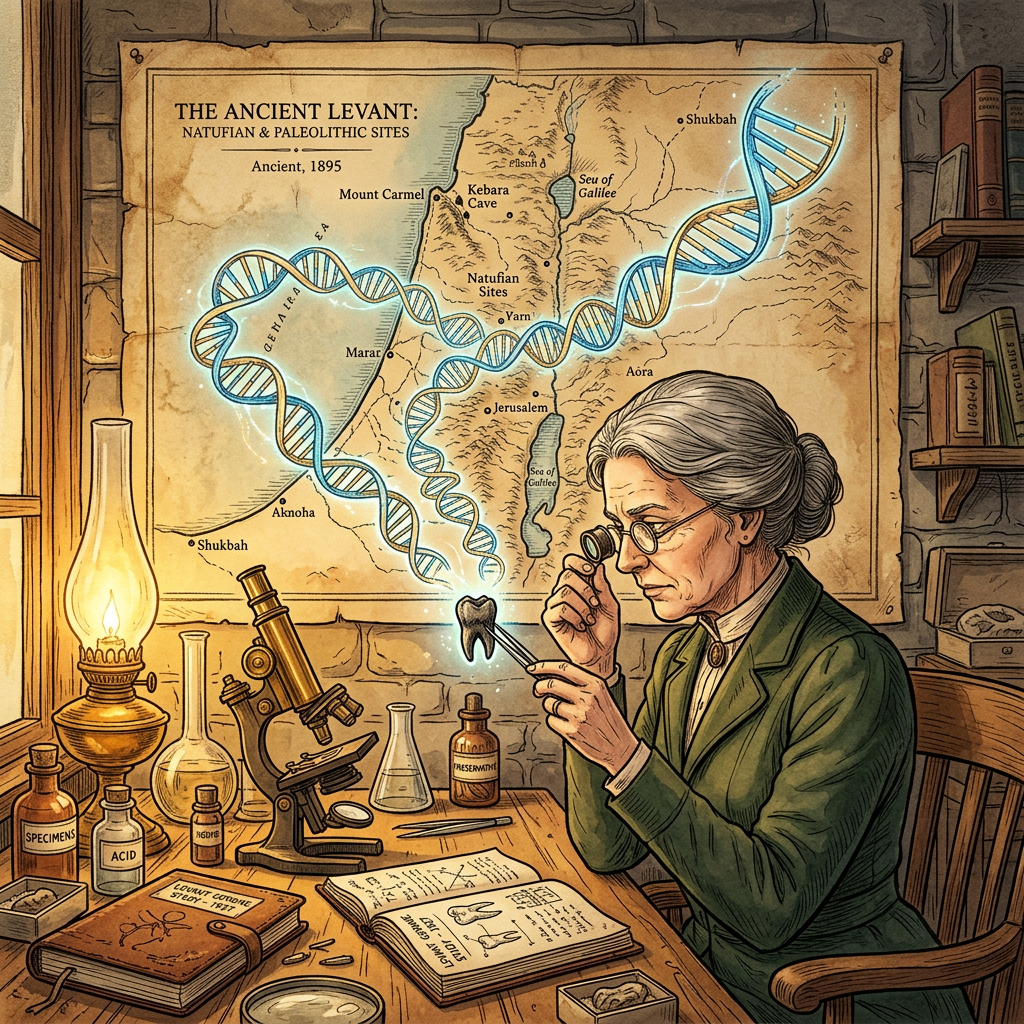
A groundbreaking study published in Nature Genetics has revealed new insights into the population dynamics of the Near East at the end of the Pleistocene. By sequencing the genomes of 15 individuals from a site in the Levant, researchers identified a significant genetic bottleneck that occurred approximately 12,000 years ago, coinciding with the Younger Dryas climatic shift. This event appears to have drastically reduced genetic diversity just before the dawn of agriculture.
The research, led by an international team of paleogenomicists, suggests that this isolated group became the primary genetic ancestors of the first Neolithic farmers in the region. The study utilized advanced high-coverage sequencing to differentiate between local survival and inward migration, ultimately concluding that the transition to farming was driven by a small, resilient population that adapted to extreme environmental stress.