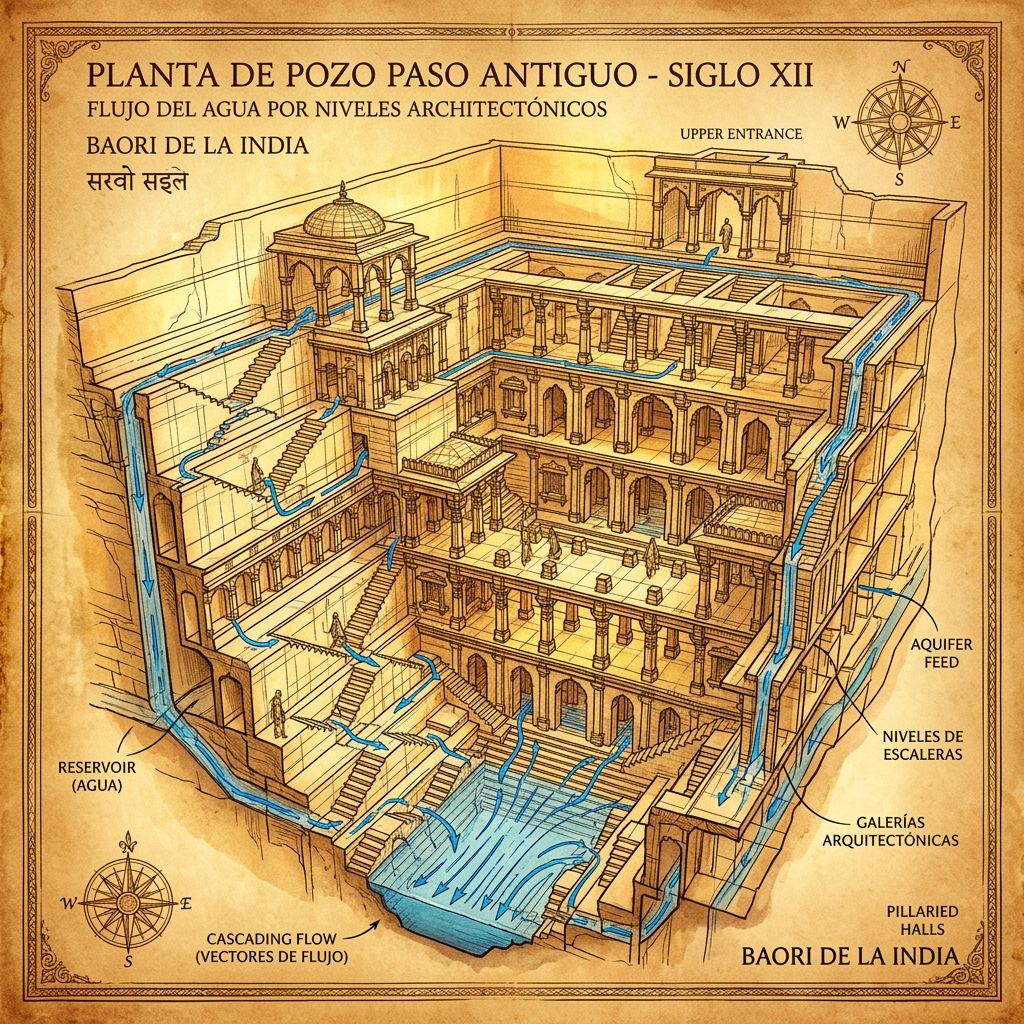
A new engineering study published in the Journal of Archaeological Science has analyzed the structural design of several 10th-century step-wells in Gujarat, India. By applying modern fluid dynamics modeling, researchers discovered that the geometry of the wells was specifically designed to utilize hydrostatic pressure to filter silt from the water. This reveals a level of environmental engineering that was far ahead of its time.
The study also found that the placement of subterranean chambers acted as natural cooling systems, maintaining a constant temperature even during peak summer months. This research shifts the perspective on step-wells from purely religious or social structures to highly functional technological hubs for water management and urban cooling in arid climates.